
 English
  русский
  Español
 Industry News
Home / News / Industry News / What factors should be considered when choosing cement production line equipment?
In the cement production industry, selecting the right cement production line equipment is crucial to ensuring production efficiency, product quality, energy consumption, and compliance with environmental standards. As the industry develops, cement production line equipment must not only meet production needs but also possess a high level of automation, environmental performance, and energy efficiency.
1. Production Capacity and Scale
One of the primary factors to consider when choosing cement production line equipment is production capacity and scale. The production capacity of a cement production line directly affects the company's output, economic benefits, and equipment operating load.
Output Requirements: The output of a cement production line is usually measured in daily output, with common production lines ranging from several hundred tons to several thousand tons per day. Companies need to determine the appropriate production capacity based on market demand and production plans.
Scale Matching: Different scales of cement production lines require different equipment. Large-scale production lines require more automated equipment and more complex processes, while small-scale production lines can choose simpler, lower-cost equipment.
2. Production Process and Equipment Configuration
The production process and equipment configuration of a cement production line are core considerations when selecting equipment. Based on different production processes, cement production lines can be divided into dry process, wet process, and semi-dry process lines, and each process requires different equipment configurations.
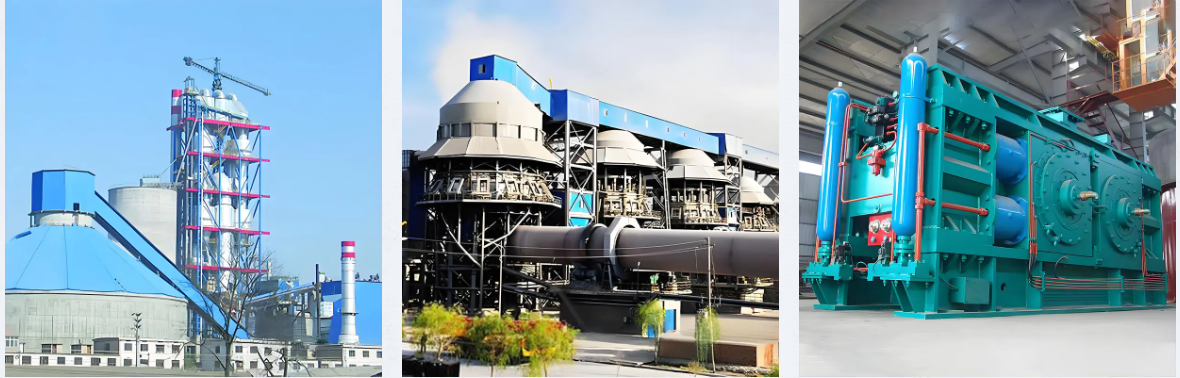
Dry Process Production Line: The dry process cement production line is the mainstream process in modern cement production. It uses less water and is suitable for large-scale, continuous production. Main equipment includes crushers, preheaters, rotary kilns, and grinding mills. Durability and operating efficiency of the equipment should be considered during selection.
Wet Process Production Line: The wet process cement production process can effectively reduce the combustion temperature of some raw materials and is suitable for clay or high-humidity raw materials. This process requires more water, and the production process consumes more energy, so the thermal efficiency and energy consumption of the cement kiln need to be considered during selection.
Semi-dry Process Production Line: This is suitable for some specific raw materials. Its characteristic is the addition of an appropriate amount of water during the production process, which retains the advantages of the dry process while compensating for the shortcomings of the wet process.
Choosing the appropriate production process can not only improve production efficiency but also reduce production costs.
3. Equipment Energy Efficiency and Energy Saving
Energy consumption in the cement production process is a significant part of production costs. The energy efficiency of cement production line equipment directly affects the company's operating costs. Therefore, when selecting equipment, special attention should be paid to its energy efficiency and energy-saving performance.
Rotary kiln thermal efficiency: The rotary kiln is one of the core equipment in a cement production line, and its thermal efficiency directly affects overall energy consumption. Choosing a rotary kiln with high thermal efficiency and low heat loss can significantly reduce energy consumption.
Application of energy-saving technologies: Modern cement production line equipment is usually equipped with energy-saving technologies, such as waste gas recovery systems and waste heat power generation systems. These technologies can significantly reduce energy waste and improve production efficiency.
Low-energy consumption motors and drive systems: Choosing high-efficiency motors and optimizing drive systems can effectively reduce power consumption and production costs.
4. Automation and Intelligence Level
With the advent of the industrial age, the automation and intelligence level of cement production line equipment is increasingly becoming an important criterion for enterprises when choosing equipment. Automated equipment can not only improve production efficiency but also reduce labor costs and operating errors.
Automatic control system: Modern cement production lines generally use digital control systems (DCS) for process control and equipment monitoring. The system ensures the stability and accuracy of the production process by automatically adjusting various parameters (such as temperature, pressure, flow rate, etc.) during the production process.
Remote monitoring and fault diagnosis: Equipment with remote monitoring capabilities can monitor the production status in real time, detect faults promptly, and perform diagnostics. This can greatly reduce downtime and maintenance costs.
Data analysis and optimization: Intelligent cement production line equipment can automatically optimize production processes through data collection and analysis, improving resource utilization and equipment efficiency.
5. Environmental Protection Requirements
With the continuous increase in global environmental protection requirements, environmental protection equipment and technologies for cement production lines have become crucial factors to consider when purchasing equipment. Cement production is a high-energy consumption and high-emission process, so choosing low-emission and low-pollution equipment is essential for the long-term development of enterprises.
Waste gas treatment system: Cement production lines need to be equipped with efficient waste gas treatment equipment, such as bag filters and denitrification systems, to reduce the emission of harmful gases such as carbon dioxide and nitrogen oxides, and comply with environmental regulations.
Noise control: Noise control of cement production line equipment is also very important. Choosing low-noise equipment can not only reduce the impact on workers and the surrounding environment but also meet relevant noise standards.
Wastewater and waste treatment: Choosing equipment with appropriate treatment solutions can effectively reduce the discharge of wastewater and solid waste during the cement production process, reducing environmental pressure.
6. Equipment Maintenance and Upkeep
Equipment maintenance and upkeep directly impact the long-term stable operation of the production line. Choosing equipment that is easy to maintain and has low maintenance costs helps reduce downtime and improve the overall efficiency of the production line.
Equipment Durability: Choosing equipment with a longer service life and high wear resistance reduces the need for frequent repairs and replacements, lowering maintenance costs.
Spare Parts Supply and Service Support: Choosing equipment manufacturers with a comprehensive after-sales service and spare parts supply system ensures that equipment can be repaired and supported promptly in case of failure.
Intelligent Monitoring System: Some advanced equipment is equipped with intelligent monitoring systems that can monitor equipment status in real time, providing early warnings of potential failures and preventing unexpected downtime.
7. Equipment Supplier Reputation and Technical Support
The reputation, technical capabilities, and after-sales service level of the equipment supplier are crucial in equipment selection. Choosing a supplier with a high reputation and strong technical support capabilities ensures the stability and production efficiency of the production line equipment.
Supplier's Industry Experience: Choosing a supplier with extensive experience, especially those with a long track record in the cement industry, can provide technical solutions and reasonable equipment selection advice.
After-Sales Service Capability: Ensure that the supplier can provide timely after-sales service, especially responding quickly and providing necessary repairs and support when equipment malfunctions.
When selecting cement production line equipment, many factors need to be considered, including production capacity, process selection, energy efficiency, automation level, environmental requirements, equipment maintenance, and supplier reputation. Companies should weigh the advantages and disadvantages of each aspect based on their specific needs to select the most suitable equipment to achieve efficient, environmentally friendly, and energy-saving production goals.
It is focused on the overall solution of dry bulk material port transfer system,
research and development, manufacturing, and service