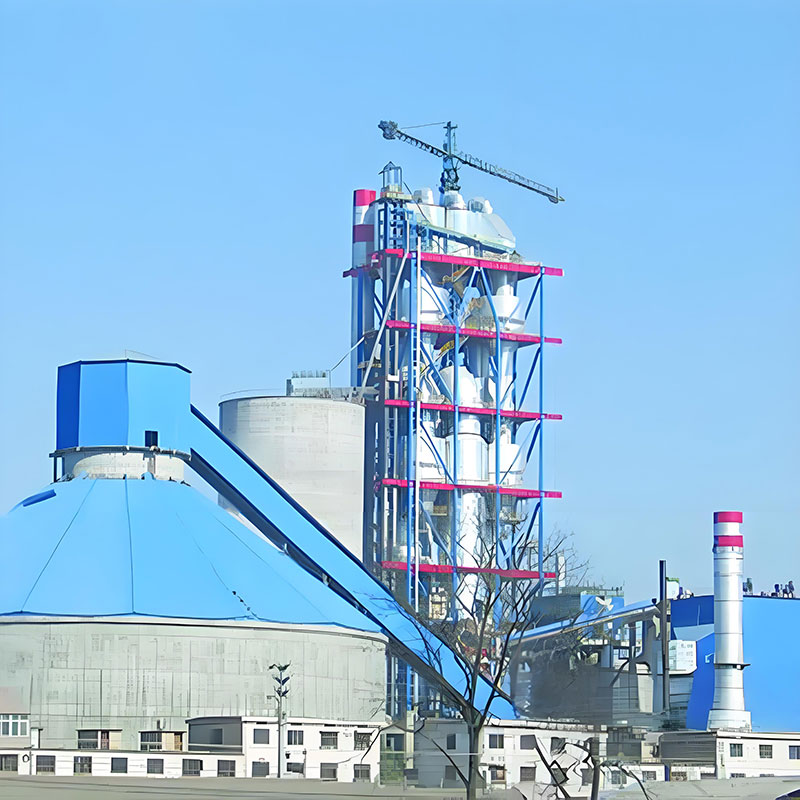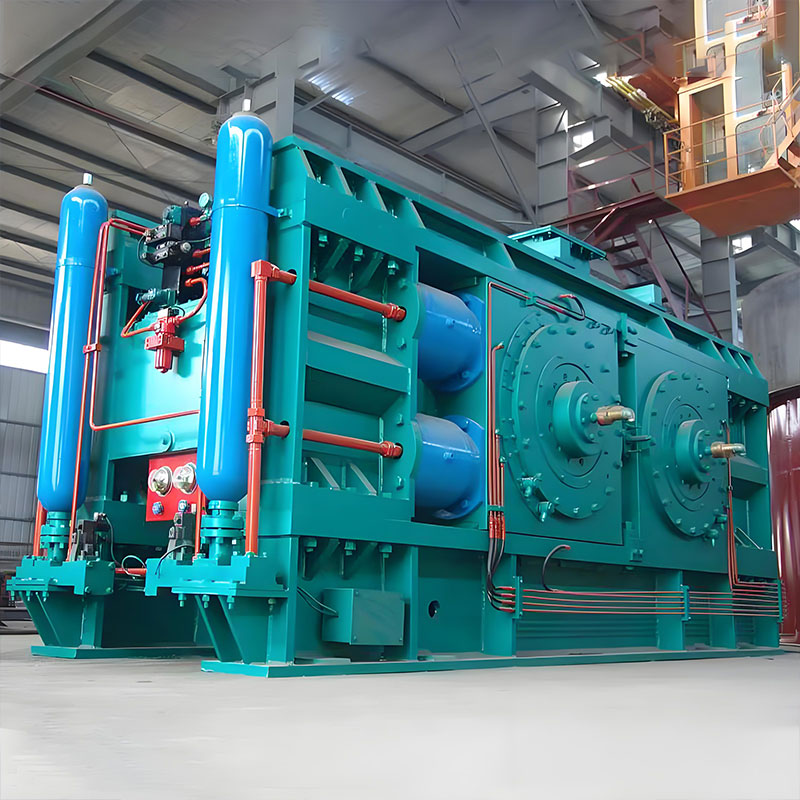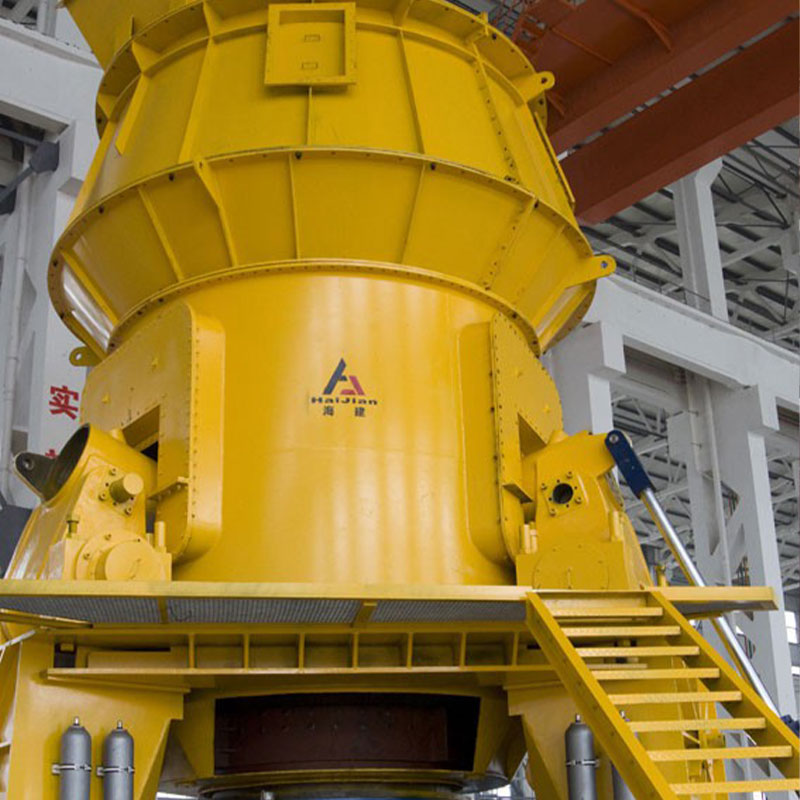
Production stability in a Cement Production Line is determined by six primary factor categories: raw material consistency, kiln thermal regime control, equipment mechanical condition, process control system accuracy, environmental compliance constraints, and workforce operational discipline. When all six are managed effectively, a well-engineered line can achieve annual kiln run factors above 90% — meaning the kiln operates for more than 330 days per year without unplanned shutdowns. Conversely, deficiency in any single category can cascade into costly stoppages, quality failures, and compliance violations. Understanding which factors carry the highest instability risk — and how to control them — is the foundation of sustainable cement manufacturing.
Content
Raw material quality is the single most influential upstream variable in cement production stability. Limestone chemistry — specifically the calcium carbonate (CaCO₃) content, silica ratio, alumina, and iron oxide levels — must remain within tight specification ranges to maintain consistent raw meal chemistry and predictable kiln behavior. A shift of just ±2% in the limestone CaCO₃ content without compensating adjustment can push the lime saturation factor (LSF) out of specification, resulting in free lime exceedances, coating ring formation, or clinker quality failures.
Moisture content variability in raw materials — particularly clay and corrective components — directly affects mill throughput and the thermal load on the preheater system. Seasonal fluctuations in moisture can swing raw mill output by 8–15% if not actively compensated. A High Efficiency Cement Production Line addresses this through automated cross-belt analyzers and online X-ray fluorescence (XRF) systems that sample the raw material stream continuously and adjust proportioning in real time, maintaining raw meal LSF standard deviation below ±1.5 rather than the ±3–4 typical of manual sampling regimes.
Fig. 1 — LSF standard deviation reduction at each raw material homogenization stage in a modern cement production line
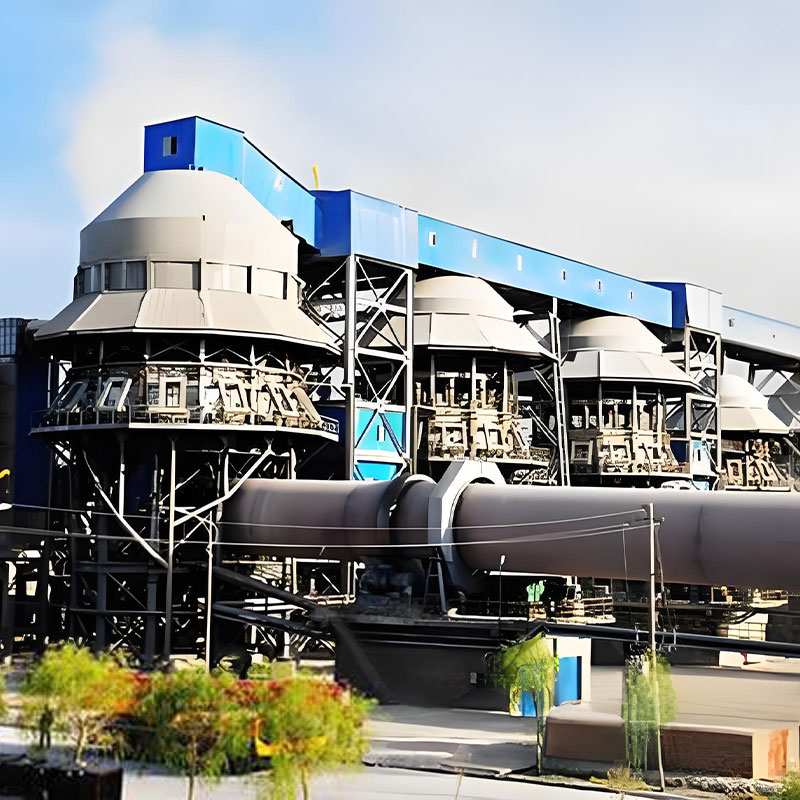
The rotary kiln is the thermal heart of any Cement Production Line. Clinkerization — the conversion of raw meal into clinker — requires sustained temperatures of 1,350–1,480°C (2,460–2,700°F) in the burning zone. Stability of this thermal regime directly controls clinker quality, energy efficiency, and refractory brick life. The three most destabilizing thermal events are coating ring formation, kiln shell overheating (red spotting), and snowmen formation at the cooler inlet.
Coating rings form when the melt phase of clinker (liquid phase content typically 25–28% at peak burn temperature) is excessive or when alkali, sulfur, and chloride cycles concentrate above critical thresholds. A stable liquid phase is necessary for nodule formation, but excess liquid causes sticky coatings that build into rings blocking material flow. Alkali bypass systems, designed to bleed 5–15% of kiln inlet gas, are installed on modern lines specifically to manage chloride and alkali cycle buildup that drives ring formation.
Kiln shell temperature is monitored continuously by infrared scanning systems that detect hotspots indicating brick thinning or joint failure. A shell temperature exceeding 350°C at any point triggers an immediate process response — either a kiln slowdown to allow recoating or an emergency shutdown for brick inspection. Unmanaged shell overheating leads to shell deformation and catastrophic refractory collapse, one of the most costly unplanned outages in cement manufacturing, typically requiring 7–21 days of downtime for full reline.
Equipment mechanical condition is the most operationally controllable stability factor. A structured preventive and predictive maintenance program is the primary differentiator between lines achieving 90%+ kiln run factors and those stuck at 75–80% due to recurring unplanned stoppages.
| Equipment Item | Primary Failure Mode | Monitoring Method | Typical Downtime if Unmanaged |
|---|---|---|---|
| Kiln tyres and support rollers | Migration, spalling, bearing failure | Thermal imaging, contact measurement | 3–14 days |
| Girth gear and pinion | Tooth wear, misalignment, fatigue cracking | Vibration analysis, oil sampling | 7–21 days |
| Raw mill and cement mill bearings | Overheating, lubrication failure | Online temperature + vibration | 1–5 days |
| Preheater cyclone and riser duct | Build-up / blockage, wear-through | Pressure differential monitoring | 0.5–3 days |
| Clinker cooler grate plates | Thermal fatigue cracking, clinker breakthrough | Temperature profiling, visual inspection | 1–4 days |
| ID fan and EP/baghouse | Blade erosion, electrode failure, filter bag damage | Emission monitoring, pressure drop | 1–7 days |
Predictive maintenance technologies — vibration spectrum analysis, oil particle counting, infrared thermography, and ultrasonic thickness measurement — allow maintenance teams to schedule interventions during planned stops rather than reacting to failures. Plants that transition from reactive to predictive maintenance programs typically reduce unplanned downtime by 35–55% within two years of full implementation.
The quality and responsiveness of process control directly determines how tightly a production line can be operated against its design parameters. Manual control of a modern rotary kiln system — with dozens of interacting process variables changing continuously — is physically impossible to sustain at the precision required for stable, efficient operation. A High Efficiency Cement Production Line relies on multi-tier automation: Distributed Control Systems (DCS) for real-time process parameter management, Advanced Process Control (APC) software for multi-variable optimization, and Expert Systems for kiln condition diagnosis.
The performance impact of Advanced Process Control is quantifiable. Plants implementing APC on their kiln systems consistently report 3–8% reductions in specific heat consumption, 1–3% increases in kiln throughput, and measurable reductions in burning zone temperature variance — all contributing directly to production stability and clinker quality consistency. Key control loops managed by APC include:
Fuel quality and feed consistency have a direct and rapid impact on kiln thermal stability. Coal calorific value variation, alternative fuel moisture fluctuations, and inconsistent fuel feed rates all create burning zone temperature swings that the control system must continuously compensate. A ±5% variation in fuel calorific value without immediate feed rate compensation can shift burning zone temperatures by 20–40°C — sufficient to move clinker quality outside specification or trigger coating instability.
Modern Eco-Friendly Cement Production Equipment incorporates alternative fuel firing systems — using industrial waste, biomass, refuse-derived fuel (RDF), and tire-derived fuel — that require particularly precise feed control given the higher calorific variability of these materials compared to coal. Best practice is to pre-condition and blend alternative fuels to a consistent calorific specification before injection, maintaining calorific variation below ±3% at the burner inlet.
Heat recovery efficiency from the clinker cooler is equally important for thermal stability. Secondary air temperature (returning from the cooler to the kiln) and tertiary air temperature (to the calciner) account for 25–35% of total heat input on a modern 5- or 6-stage preheater line. Degraded cooler performance from grate plate failure, clinker size distribution changes, or airflow maldistribution directly reduces these return air temperatures and increases specific heat consumption — destabilizing the thermal balance of the entire system.
Fig. 2 — Specific heat consumption (kcal/kg clinker) trend: plants with and without APC and efficient heat recovery, 2020–2025
Environmental compliance is an increasingly direct driver of production stability decisions. Emission limit values for NOₓ, SO₂, dust, and in many jurisdictions CO₂ — enforced by continuous emission monitoring systems (CEMS) — create hard operational boundaries that can force kiln production rate reductions or shutdowns if exceeded.
NOₓ formation increases sharply with burning zone temperature — a kiln operating at the high end of its temperature range for quality reasons may generate NOₓ above permitted limits, forcing a process compromise between clinker quality and emission compliance. Eco-Friendly Cement Production Equipment addresses this through low-NOₓ burner technology, selective non-catalytic reduction (SNCR) ammonia injection, and calciner design optimizations that reduce thermal NOₓ formation without compromising clinkerization quality.
Dust emission compliance depends entirely on the continuous performance of the electrostatic precipitator (ESP) or baghouse filter. A single electrode field failure in an ESP, or a row of broken filter bags in a pulse-jet baghouse, can push stack emissions above permitted levels within minutes — triggering a regulatory notification requirement or, in severe cases, a production stop order. Automated performance monitoring and rapid-response maintenance protocols for these systems are non-negotiable for stable operation in regulated markets.
Even the most advanced Cement Production Line depends on operator competency and procedural discipline for sustained stability. Process data analysis at plants worldwide consistently shows measurable performance variation between shifts — an indicator that operator decision-making quality directly influences production outcomes independent of equipment state.
The most impactful operational stability factors include:
It is focused on the overall solution of dry bulk material port transfer system,
research and development, manufacturing, and service