Content
A modern cement production line achieves efficient material conveying and mixing through a fully integrated system: belt conveyors and bucket elevators move raw materials at throughputs of 500 to 3,000 t/h, while continuous blending silos and air-slide systems homogenize raw meal to a coefficient of variation (CV) below 1.0%—the threshold required for consistent clinker quality. Plants that have upgraded from batch-type mixing to continuous homogenization systems report specific heat consumption reductions of 3–8% and clinker f-CaO (free lime) reduction from above 2.0% to below 1.0%, directly improving cement strength class consistency.
The efficiency of material conveying and mixing on a cement production line is not determined by any single piece of equipment—it results from the integration of crusher discharge systems, pre-homogenization stockpiles, raw mill circuits, continuous blending silos, and kiln feed systems working in coordinated sequence. This article examines each stage with specific performance data and the design choices that separate high-efficiency lines from average ones.
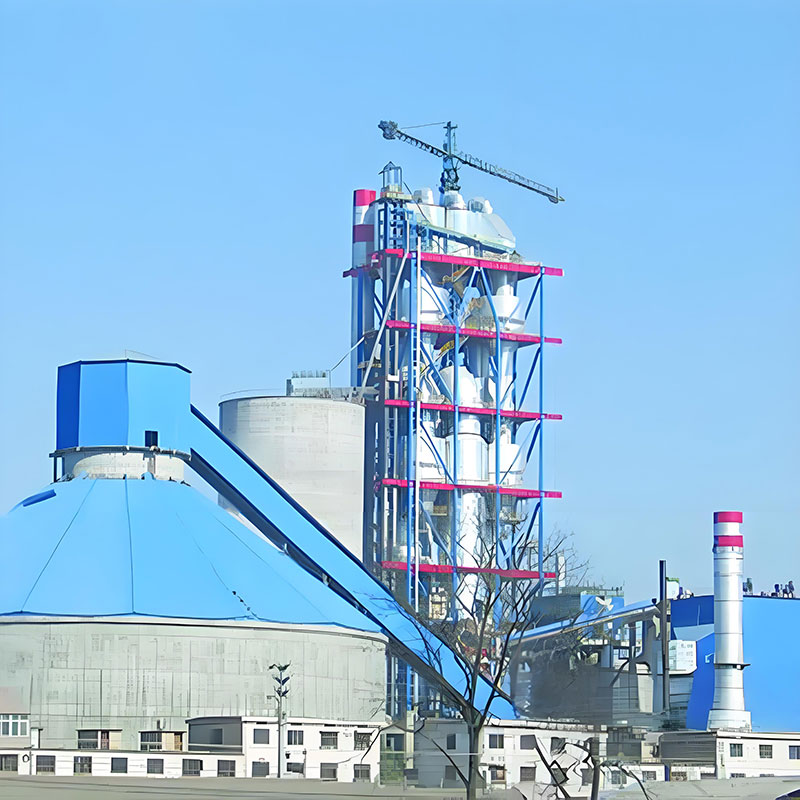
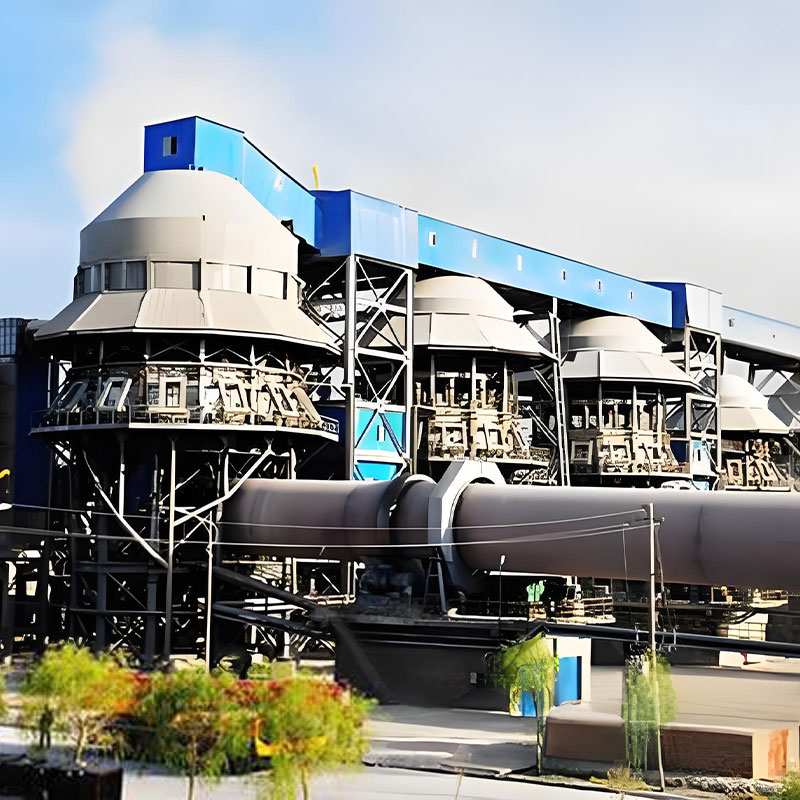
Understanding material conveying and mixing efficiency requires a clear picture of the full production sequence. On a dry-process cement line—which accounts for over 90% of new cement capacity installed globally since 2000—materials move through the following stages:
| Production Stage | Primary Conveying Equipment | Typical Throughput | Key Efficiency Metric |
|---|---|---|---|
| Quarry → Crusher | Dump trucks / in-pit conveyor | 1,000–5,000 t/h | Crusher availability ≥95% |
| Crusher → Pre-homo stockpile | Belt conveyor | 800–3,000 t/h | CaCO₃ CV ≤1.0% at reclaim |
| Stockpile → Raw mill | Belt feeder + belt conveyor | 150–600 t/h | Feeder accuracy ±0.5% |
| Raw mill → CF silo | Pneumatic transport / bucket elevator | 100–500 t/h | Transport air-to-material ratio ≤30 Nm³/t |
| CF silo → Kiln preheater | Airslide + bucket elevator | 250–800 t/h | Feed rate stability ±1.5% |
Belt conveyors carry the largest share of material movement on a cement production line—handling limestone, clay, coal, clinker, and finished cement at every stage between crushing and dispatch. Their efficiency is determined by belt speed, belt width, troughing angle, and drive system design:
A cement plant's primary crusher discharge conveyor typically uses a belt width of 1,200 to 2,000 mm running at 1.5 to 2.5 m/s to transport 1,000–3,000 t/h of crushed limestone. Wider belts running at lower speeds reduce material spillage and belt wear compared to narrow high-speed belts at equivalent throughput. The specific belt loading (cross-sectional area of material on the belt) is designed to fill no more than 80% of the belt's rated capacity to provide buffer for feed surges—a critical protection for downstream equipment.
Conveyor drive systems account for 3–8% of a cement plant's total electrical energy consumption. Modern variable frequency drive (VFD) motors on major conveyors save 15–30% of conveyor energy compared to fixed-speed direct-on-line starts by matching motor speed to actual load rather than running at full speed during partial load conditions. On a 5,000 t/d clinker plant, converting primary belt conveyors to VFD operation typically saves 400,000–800,000 kWh annually—equivalent to $30,000–$60,000 per year at average industrial electricity tariffs.
Pipe conveyors—where the belt curls into a closed tube around the material—are increasingly used on cement lines where dust emission control is a regulatory requirement or where the conveyor route requires tight curves (minimum radius as small as 300 m versus 600–800 m for standard troughed conveyors). Pipe conveyors provide fully enclosed transport with dust emissions below 5 mg/Nm³, meeting EU Industrial Emissions Directive limits without requiring separate enclosure structures, and can operate on inclines up to 30°—allowing direct routing from quarry to crusher that would otherwise require multiple transfer points.
The pre-homogenization stockpile is the first deliberate mixing step on the cement production line. Its purpose is to reduce the chemical variability of quarried limestone before it enters the raw mill—transforming a variable feed into a consistent one. The degree of homogenization achieved by the stockpile directly determines how hard the CF silo must work downstream.
Two stacking methods are used on cement lines, with significantly different homogenization performance:
Side-scraper reclaimers that cut perpendicular to the stacking direction expose the maximum number of layers per bucket pass—this is the correct reclaiming direction for all pre-homogenization stockpiles. Reclaimers that take material from the pile end (portal scrapers) expose fewer layers and reduce homogenization effectiveness by 30–50% compared to side scraping.
On a well-operated windrow stockpile with side scraper reclaimer: input CaCO₃ standard deviation of ±3.5% at the crusher is reduced to ±0.35–0.45% at the raw mill feed—a homogenization factor of approximately 8–10×. This reduction in upstream variability allows the raw mill proportioning system and CF silo to operate within a narrower control band, reducing corrective dosing frequency and improving kiln feed chemistry stability.
The continuous flow (CF) blending silo is the most important single piece of mixing equipment on a dry-process cement production line. It receives ground raw meal from the raw mill and delivers homogenized kiln feed at the consistency required for stable clinker chemistry. Modern CF silos replace the older batch-type blending silos that required alternating fill-aerate-discharge cycles—a process that was both energy-intensive and operationally inflexible.
A CF silo typically holds 8,000 to 25,000 tonnes of raw meal and operates simultaneously in fill and discharge mode. The silo floor is divided into multiple aeration sectors (typically 6–12 sectors) that are activated in sequence. Air injected through the floor pads fluidizes the raw meal in the active sector, causing it to flow freely toward the central discharge cone—while non-aerated sectors remain packed. The sequential aeration of sectors combined with the gravity flow from different radial positions within the silo achieves continuous cross-blending of material deposited at different times. This simultaneous fill-and-discharge operation eliminates the dead time of batch systems and allows continuous kiln feeding without interruption.
| Parameter | Batch Blending Silo | Continuous Flow (CF) Silo | Improvement |
|---|---|---|---|
| Output CaO standard deviation | ±0.30–0.50% | ±0.10–0.20% | 50–60% reduction |
| Homogenization factor (H) | 5–8× | 8–15× | Up to 2× improvement |
| Specific aeration energy | 0.5–1.2 kWh/t | 0.1–0.3 kWh/t | 60–80% energy reduction |
| Kiln feed interruption frequency | 2–4 times/day (batch cycle transitions) | Continuous; zero interruptions | Continuous kiln operation |
| f-CaO in clinker (free lime) | 1.0–2.5% | 0.5–1.0% | Improved clinker quality |
Raw meal, kiln feed, and finished cement are fine powders (median particle size 10–40 µm) that cannot be transported by belt conveyors without unacceptable dust losses. Two pneumatic conveying technologies handle fine powder movement on cement lines:
Dense-phase systems transport fine powder in a slow-moving, high-concentration plug at conveying velocities of 3–8 m/s (compared to 20–35 m/s in dilute-phase systems). The low velocity minimizes pipe wear, reduces particle degradation, and consumes 40–60% less compressed air energy per tonne transported compared to dilute-phase systems. Dense-phase is the preferred technology for raw meal transport from mills to blending silos on modern cement lines—typical operating parameters are a solids loading ratio of 30–60 kg solids per kg of conveying air and a transport distance of 50–500 m.
An airslide is an inclined channel (slope 6–8°) with a permeable membrane floor through which low-pressure air is injected to fluidize the powder. Once fluidized, the material flows under gravity—the air merely overcomes interparticle friction rather than providing transport energy. Airslides consume only 0.05–0.15 kWh/t of transported material, making them by far the most energy-efficient conveying option for fine cement plant powders wherever the layout permits a downhill flow path. They are used extensively for kiln feed transfer from the CF silo to the preheater elevator, for cement transport from the separator to storage silos, and for clinker dust recirculation.
Central chain or belt bucket elevators handle vertical transport at every stage where material must be lifted—from ground level to preheater top (typically 80–120 m lift), from mill discharge to separator, and from clinker cooler to clinker silo. Modern high-capacity bucket elevators on 5,000 t/d lines operate at 500–700 t/h capacity with lifts up to 150 m, running on central chains with deep-draw steel buckets. Key efficiency parameters: bucket fill ratio above 75% (partial buckets waste energy per unit transported) and drive efficiency above 92% achieved through direct gearbox coupling without belt-and-pulley intermediate stages.
Figure 1: Specific energy consumption by conveying technology (kWh/t per 100m of transport distance)
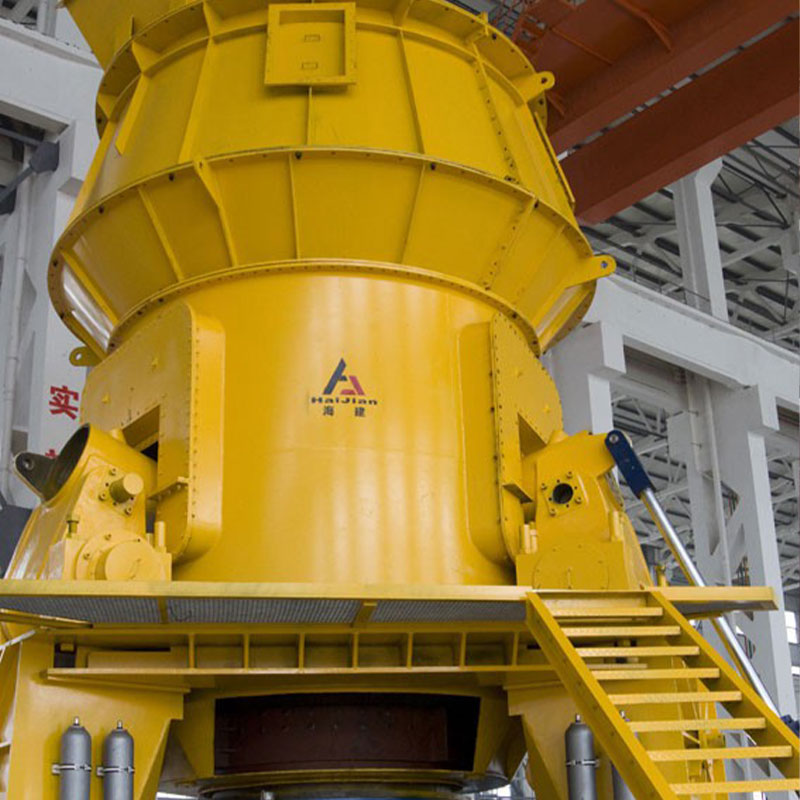
The raw mill does more than grind—it is also the primary mixing point where separately reclaimed raw materials are blended into a compositionally uniform raw meal for the first time. The grinding circuit's ability to maintain product chemistry within specification is as important as its throughput.
The vertical roller mill has become the dominant raw grinding technology on new cement production lines since the 1990s, for compelling efficiency reasons:
| Parameter | Ball Mill (with separator) | Vertical Roller Mill (VRM) |
|---|---|---|
| Specific grinding energy | 15–20 kWh/t raw meal | 10–14 kWh/t raw meal |
| Drying capacity | Up to 6% feed moisture | Up to 20% feed moisture |
| Product fineness control | Good; limited by separator speed | Precise; dynamic separator integral |
| Startup/shutdown time | 20–40 min to stable operation | 5–15 min to stable operation |
| Noise level | 95–110 dB(A) | 80–90 dB(A) |
| Footprint (same capacity) | Larger; separate separator building | 30–40% smaller; integrated |
The proportioning of raw materials at the mill feed is controlled by gravimetric belt feeders with load cells connected to a process control system. Modern cement plants use online X-ray fluorescence (XRF) analyzers positioned at the mill discharge to measure the oxide chemistry of the raw meal in real time—typically with a measurement cycle of 1–3 minutes. The analyzer output is used by the process control system to automatically adjust the setpoints of the limestone, clay, iron ore, and corrective material feeders to maintain the target lime saturation factor (LSF), silica ratio (SR), and alumina ratio (AR) within ±1.5% of target values. This closed-loop chemistry control reduces the variability burden on the CF silo and is a key contributor to overall production line efficiency.
Understanding the energy contribution of conveying and mixing relative to the overall production process helps prioritize efficiency investments:
Figure 2: Typical electrical energy consumption breakdown by process area on a modern dry-process cement production line
Conveying and transport account for approximately 7% of total electrical energy consumption—typically 6–9 kWh per tonne of cement on a well-optimized modern line. While this is smaller than raw or cement grinding, the cumulative impact of conveying inefficiency across all materials handled (limestone, coal, raw meal, clinker, cement: total 3–4 tonnes of material moved per tonne of finished cement) means that conveying optimization delivers measurable returns at plant scale.
Modern cement production lines use integrated distributed control systems (DCS) to manage material flow and mixing quality across the entire plant. The key automation functions that directly improve conveying and mixing efficiency are:
The industry target for kiln feed CaO coefficient of variation is below 1.0%, with leading plants achieving CV below 0.5% on modern continuous blending systems. This target matters directly because kiln feed chemistry variability translates into clinker quality variability. When kiln feed LSF fluctuates, the kiln burning zone temperature must be adjusted continuously to compensate—each correction introduces a transient period of suboptimal clinker formation. Studies on cement kiln operations show that reducing kiln feed CaO standard deviation from ±0.5% to ±0.2% reduces specific heat consumption by 3–6 kJ/kg clinker and improves 28-day cement compressive strength consistency by 1–2 MPa—a meaningful quality improvement for cement producers targeting strength class certification.
The primary decision criterion is particle size. Belt conveyors are used for coarse materials (above 5 mm) such as limestone, clinker, and coal. Pneumatic conveying (dense-phase or bucket elevators for vertical lifts) is used for fine powders (below 100 µm) such as raw meal, kiln feed, and cement—materials that cannot be transported on open belts without unacceptable dust losses. For fine powder transport, dense-phase pneumatic conveying is preferred over dilute-phase for distances above 50 m due to its 40–60% lower energy consumption and significantly lower pipe wear rate. For very short horizontal distances on fine powder (under 50 m with available downhill gradient), airslides are the most energy-efficient choice. The selection also considers routing constraints: pneumatic systems can navigate corners and level changes that belt conveyors cannot accommodate without additional transfer points.
The most frequent conveying system downtime causes, in order of occurrence on a typical cement plant, are: (1) Belt conveyor belt damage and splicing failures—caused by tramp metal, overloading at transfer points, and mistracking. Prevention: magnetic separators and metal detectors on all incoming raw material conveyors; automated belt tracking systems; regular splice inspection at 2,000-hour intervals. (2) Bucket elevator chain wear and bucket breakage—particularly on clinker elevator routes where temperatures reach 100–200°C. Prevention: high-temperature chain lubrication systems and bucket wear plate monitoring. (3) Pneumatic conveying pipe blockage—caused by moisture condensation in raw meal during cold shutdowns or by oversized particles entering the system. Prevention: isolation valves to protect conveying lines during mill shutdowns and particle size monitoring at mill discharge. (4) Airslide membrane damage—caused by moisture saturation of the permeable fabric (preventing fluidization) or mechanical damage from access. Prevention: compressed air supply quality monitoring and access procedure controls.
For a 5,000 t/d clinker line, the raw material consumption rate is approximately 7,500–8,000 t/day of limestone (plus approximately 1,500–2,000 t/day of corrective materials). Industry practice for pre-homogenization stockpile sizing is to provide a minimum of 5 to 7 days of raw material storage—yielding a live storage capacity of 37,500–56,000 tonnes for limestone. A typical covered longitudinal stockpile for this capacity would be approximately 250–300 m long, 40–50 m wide, and 15–20 m high. The storage volume also functions as a buffer against quarry operational disruptions (blasting schedules, weather, equipment maintenance). Plants with high raw material variability (CV above 5% at the crusher) may extend stockpile storage to 10 days to allow additional homogenization time, at the cost of higher capital investment in stacker/reclaimer equipment.
Most alternative raw materials can be handled with standard cement plant conveying equipment, but with specific considerations for each material. Fly ash: A fine powder (median particle 10–30 µm) with bulk density 0.6–0.8 t/m³—suitable for pneumatic conveying, airslides, and bucket elevators using the same equipment as raw meal, but requires careful moisture control (fly ash above 1% moisture blocks pneumatic conveying systems). Granulated blast furnace slag: Coarser (often 2–10 mm granules) and can be handled by belt conveyors, but is highly abrasive and requires reinforced belt covers and ceramic-lined conveyor chutes at transfer points. Bottom ash: Variable particle size and often contains tramp metal—requires screening, magnetic separation, and crusher treatment before entering the standard conveying system. For all alternative materials, dedicated storage with controlled extraction avoids contamination of the main raw material streams and allows precise dosing to the raw mill proportioning system.
For a 5,000 t/d clinker plant upgrading from a batch blending system to a modern CF silo, the capital cost is typically $3–6 million for the silo structure, aeration system, and control integration. The financial returns come from multiple sources: aeration energy savings of 0.2–0.9 kWh/t raw meal (saving $150,000–$450,000 per year at $60/MWh), clinker specific heat consumption reduction of 3–8 kJ/kg clinker (saving 50,000–150,000 GJ/year of fuel), reduced kiln thermal instability events (each avoided kiln stoppage worth $40,000–$80,000 in production loss), and improved cement quality consistency (reducing out-of-specification production). Combined, these benefits typically deliver a payback period of 2–5 years on the capital investment, with plants in high-fuel-cost regions (Europe, Asia) achieving payback in the lower end of this range due to the higher financial value of specific heat consumption savings.
It is focused on the overall solution of dry bulk material port transfer system,
research and development, manufacturing, and service