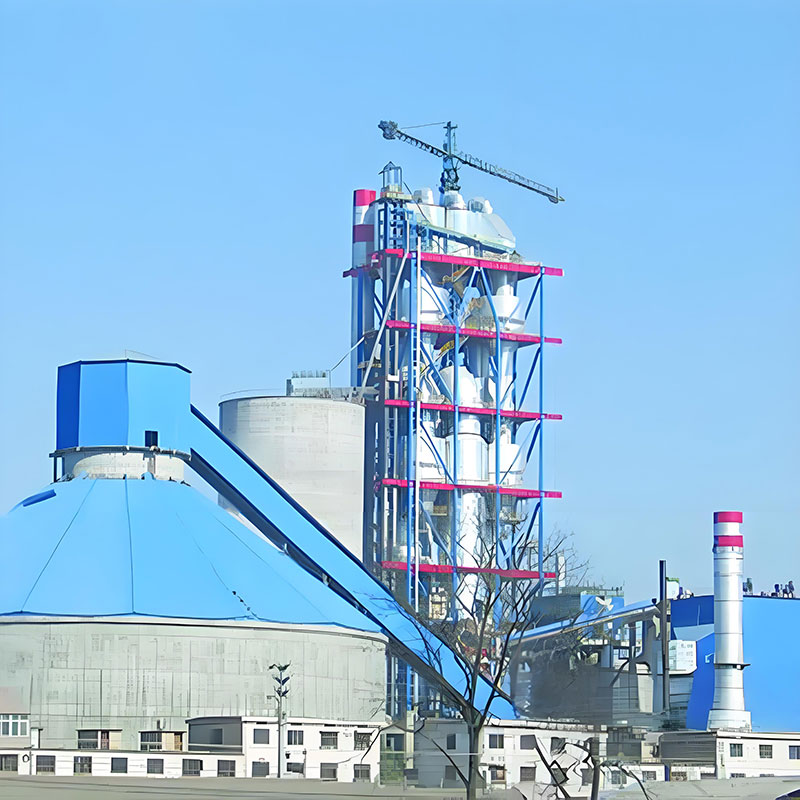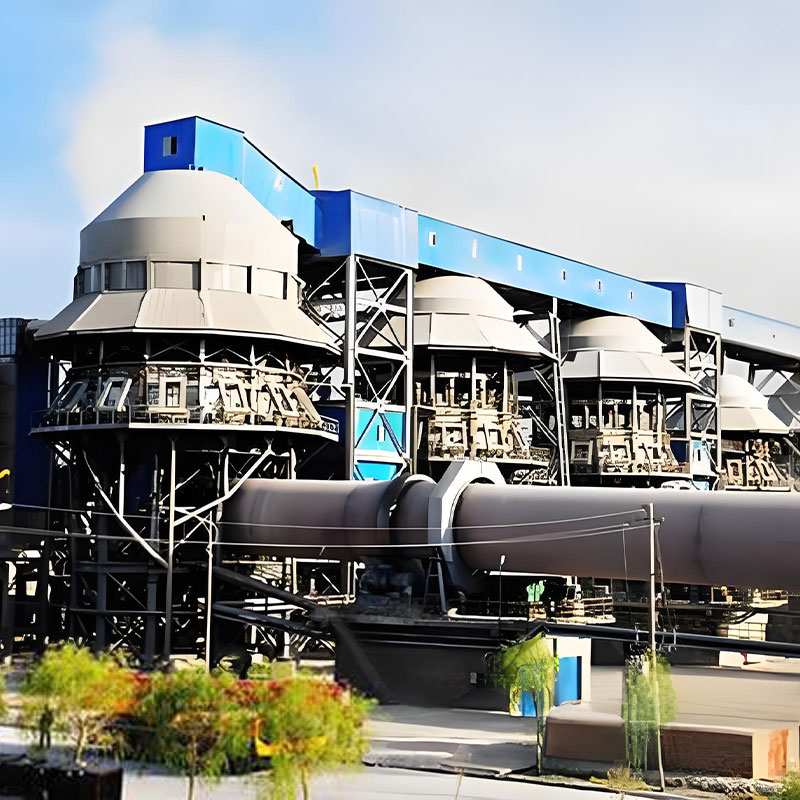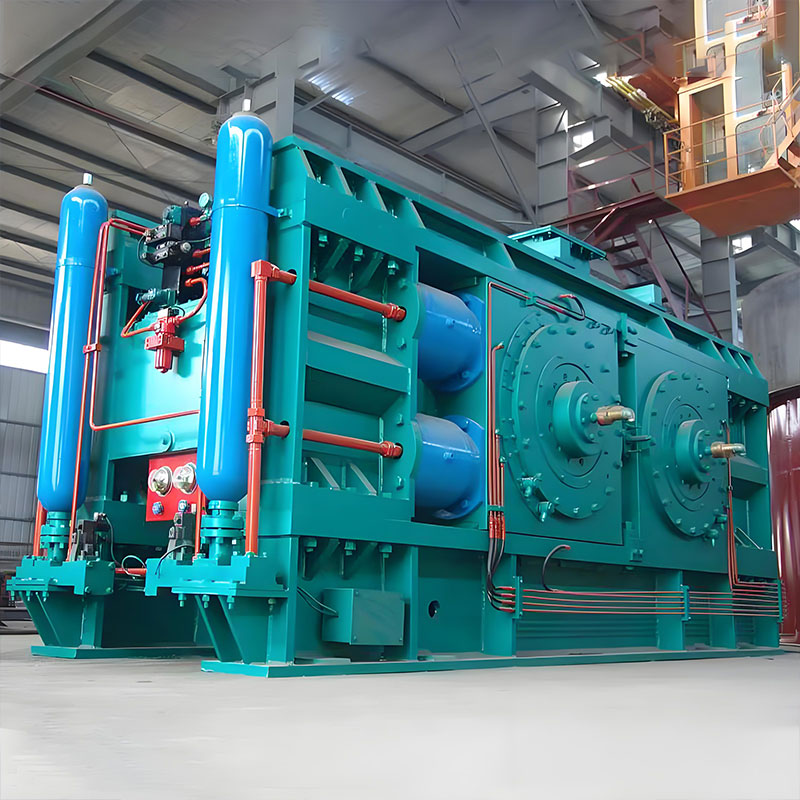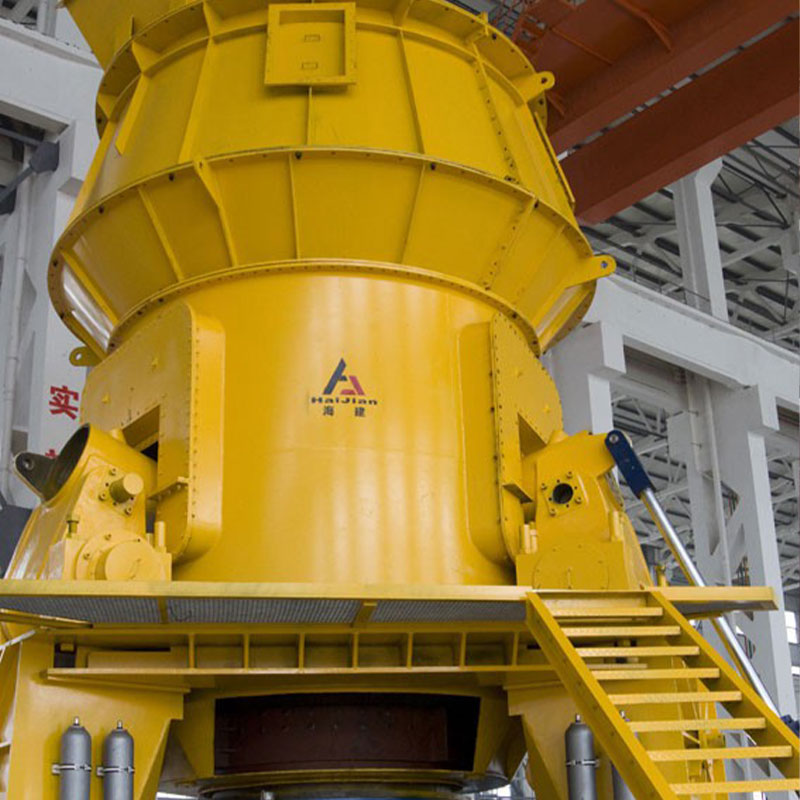
Reducing downtime on a lime production line by 60% is achievable through five structured maintenance practices: scheduled refractory inspection, rotary kiln alignment monitoring, drive and transmission servicing, dust collection system maintenance, and a data-driven predictive maintenance program. Plants that implement all five in a coordinated schedule consistently report unplanned shutdown rates dropping from an industry average of 12–15% of annual operating hours to under 5%.
This guide covers each step in practical detail, with specific inspection intervals, acceptance criteria, and the failure modes each step prevents — whether your facility operates a Rotary Kiln Lime Production Line, a vertical shaft kiln system, or a combined calcination and hydration train.
Content
An Active Lime Production Line operates under some of the most demanding conditions in heavy industry: continuous calcination temperatures of 900–1,200°C, abrasive limestone feed, corrosive dust, and the mechanical stress of large rotating equipment running around the clock. Any single point of failure — a cracked refractory brick, a misaligned kiln shell, or a blocked dust collector — can shut down the entire production train within hours.
The financial stakes are significant. A mid-size Industrial Active Lime Plant producing 500–1,000 tonnes per day loses substantial revenue for every unplanned production day lost. Beyond direct output loss, unplanned stops cause thermal shock to refractory linings, accelerating wear and compressing the time to the next scheduled maintenance window.
Structured preventive maintenance does not just reduce downtime — it extends the service life of capital-intensive components like kiln shells, riding rings, and girth gears by 30–50% compared to purely reactive maintenance approaches.
The refractory lining is the most critical wear component in any Rotary Kiln Lime Production Line. It is the only barrier between the 1,000°C+ calcination zone and the steel kiln shell. Refractory failure is the single leading cause of unplanned kiln shutdowns, responsible for an estimated 35–40% of all unscheduled stops in lime kilns worldwide.
A well-maintained refractory lining in the burning zone of a rotary lime kiln should achieve 18–24 months of service life before full replacement. Plants reporting 10–12 month lining life typically have unresolved shell ovality, inconsistent feed chemistry, or inadequate coating management — all correctable root causes.
Kiln axis alignment is fundamental to the mechanical health of a High Efficiency Lime Production Line. A kiln operating out of alignment places uneven load on riding rings, support rollers, and the girth gear, causing accelerated wear across multiple components simultaneously — all while the misalignment itself is invisible to operators watching normal process parameters.
Plants that conduct annual alignment surveys and correct deviations proactively typically extend riding ring and roller service life by 40–60% compared to those that only react to audible mechanical noise or visible wear patterns.
The drive system — comprising the main motor, gearbox, pinion, and girth gear — transmits continuous torque to rotate a kiln shell that may weigh several hundred tonnes. Drive failures are the second most common cause of unplanned stops in an Industrial Active Lime Plant, accounting for approximately 25% of unscheduled downtime events.
Dust collection is the third largest source of unplanned downtime in lime production, accounting for approximately 17% of unscheduled stops. Baghouse filter failures, electrostatic precipitator malfunctions, and blocked ductwork all trigger production shutdowns — and in many jurisdictions, an emission exceedance forces an immediate stop until the system is repaired and inspected by environmental authorities.
The four steps above are all preventive — they reduce the probability of failure. Step 5 converts the maintenance program from reactive-preventive to truly predictive, using continuous condition data to identify developing failures weeks or months before they cause downtime. Plants with mature predictive maintenance programs on their High Efficiency Lime Production Lines report a further 20–30% reduction in maintenance costs alongside the downtime reduction, because components are replaced at the end of their actual service life rather than at a fixed calendar interval.
Install permanent vibration sensors on all major bearings — main motor, gearbox input and output shafts, pinion shaft, and support roller bearings. Use automated spectral analysis software to detect bearing defect frequencies (BPFI, BPFO, BSF) at amplitudes below the threshold of human perception. A bearing detected at Stage 2 defect (elevated broadband noise) can be replaced in a planned 4-hour maintenance window; the same bearing reaching Stage 4 failure (thermal runaway) forces a multi-day unplanned outage for emergency replacement and damage assessment.
Sample all gearbox and lubrication system oils every 1,000 operating hours and analyze for viscosity, water content, particle count, and elemental wear metals (iron, copper, chromium). Trending wear metal concentrations provide 4–8 weeks of advance warning before a gear or bearing failure becomes imminent — enough time to source spare parts and schedule a planned stop.
In an Active Lime Production Line, subtle process parameter shifts often precede mechanical failures. Kiln drive power trending upward without a corresponding increase in feed rate indicates increasing internal resistance — potentially from refractory spalling into the charge, ring formation, or bearing drag. Automated alarming on 7-day rolling average deviations of more than 3% from baseline triggers investigation before the root cause becomes critical.
The table below consolidates the recommended inspection and servicing intervals discussed across all five steps into a single reference schedule suitable for integration into a plant CMMS (Computerized Maintenance Management System):
| Component / Task | Interval | Method | Key Acceptance Criterion |
|---|---|---|---|
| Kiln shell thermal scan | Weekly | Infrared camera | Shell surface < 350°C |
| Riding ring migration | Monthly | Dial gauge / laser | < 10 mm/month axial movement |
| Girth gear spray lubrication | Monthly | Visual / flow check | All nozzles active, correct pattern |
| Pinion backlash | Monthly | Lead wire / feeler gauge | 0.1–0.15% of pitch circle diameter |
| Baghouse differential pressure | Continuous | Online transmitter | Within 500 Pa of clean baseline |
| Oil spectrographic analysis | Every 1,000 hrs | Lab analysis | No abnormal wear metals trending |
| Roller contact pattern | Quarterly | Visual / blue-dye check | Full-face contact, no edge loading |
| Kiln axis alignment survey | Annually | Laser alignment system | ±1 mm per 10 m kiln length |
| Refractory internal inspection | Every planned stop | Visual / probe thickness | No cracks, spalling, or hot spots |
Effective maintenance begins with equipment that is engineered for maintainability — with accessible inspection points, robust mechanical design, and components rated for the thermal and mechanical demands of continuous lime production.
Jiangsu Haijian Co., Ltd. was established in 1970 and restructured into a provincial privately-owned joint-stock company in 2003. The company employs over 300 people, with engineering and technical personnel accounting for 25% of the total workforce. It covers an area of 100,000 m² with a building area of 55,000 m².
Manufacturing capabilities include vertical lathes from Φ2.5–10 m, gear hobbing machines up to Φ8 m, floor-type lathes up to Φ7×20 m, overhead cranes from 10–150 t, plate rolling machines from 30–120, and gas annealing furnaces measuring 6.5×6.5×18 m — a total of 500 units/sets of equipment.
As a professional China Active Lime Production Line manufacturer, Jiangsu Haijian provides cement production equipment, industrial solid waste incineration equipment, and professional equipment for mining and metallurgical applications. The company is a major manufacturing enterprise, a key backbone enterprise, and a primary export base for cement, power, environmental protection, and metallurgical and mining equipment in China.
The company holds independent import and export rights and is legally authorized to undertake general contracting for foreign projects, serving clients across global markets with both standard and custom-engineered solutions for Rotary Kiln Lime Production Lines and Industrial Active Lime Plants.
Q1. How often should the refractory lining in a rotary lime kiln be fully replaced?
In a well-maintained Rotary Kiln Lime Production Line, the burning zone refractory lining should achieve 18–24 months of service life before full replacement. Shorter lining life (10–12 months) typically indicates unresolved shell ovality, chemistry variations in the limestone feed, or inadequate coating management — each of which should be investigated and corrected before the next relining campaign.
Q2. What is the most reliable early warning sign of a developing girth gear problem?
The two most reliable early indicators are a gradual increase in main drive motor current at constant feed rate, and the appearance of abnormal iron or chromium in gearbox oil analysis results. Both signals typically appear 4–8 weeks before a failure becomes audible or causes process disruption — providing sufficient lead time for planned maintenance intervention.
Q3. How frequently should kiln alignment surveys be conducted on an active lime production line?
Annual laser alignment surveys are the industry standard for continuous-operation Active Lime Production Lines. Additional surveys should be conducted immediately after any significant foundation settlement event, after a major thermal incident (uncontrolled kiln stop from a power outage, for example), or whenever riding ring migration rates exceed 10 mm per month — as this rate of migration is a reliable indicator of underlying geometry problems.
Q4. What causes baghouse filters to fail prematurely on lime plants?
The three most common causes are: operating above the filter's rated air-to-cloth ratio (typically caused by excess moisture in the gas stream causing blinding), failed pulse-jet cleaning valves leaving individual bag rows uncleaned, and bag abrasion from improperly seated or worn wire cages. Monthly pulse-jet system checks and 6-monthly bag inspections address all three root causes before they result in a regulatory exceedance or forced production stop.
Q5. Is predictive maintenance cost-effective for a smaller industrial active lime plant?
Yes. Even for plants producing 200–500 tonnes per day, the investment in permanent vibration sensors on key bearings and a quarterly oil sampling program typically delivers a 3:1 to 5:1 return within the first two years — through avoided emergency parts sourcing, reduced overtime labor costs, and elimination of secondary damage that a bearing or gear failure causes to adjacent components. Entry-level continuous monitoring systems are now sufficiently cost-effective for plants of almost any scale.
It is focused on the overall solution of dry bulk material port transfer system,
research and development, manufacturing, and service