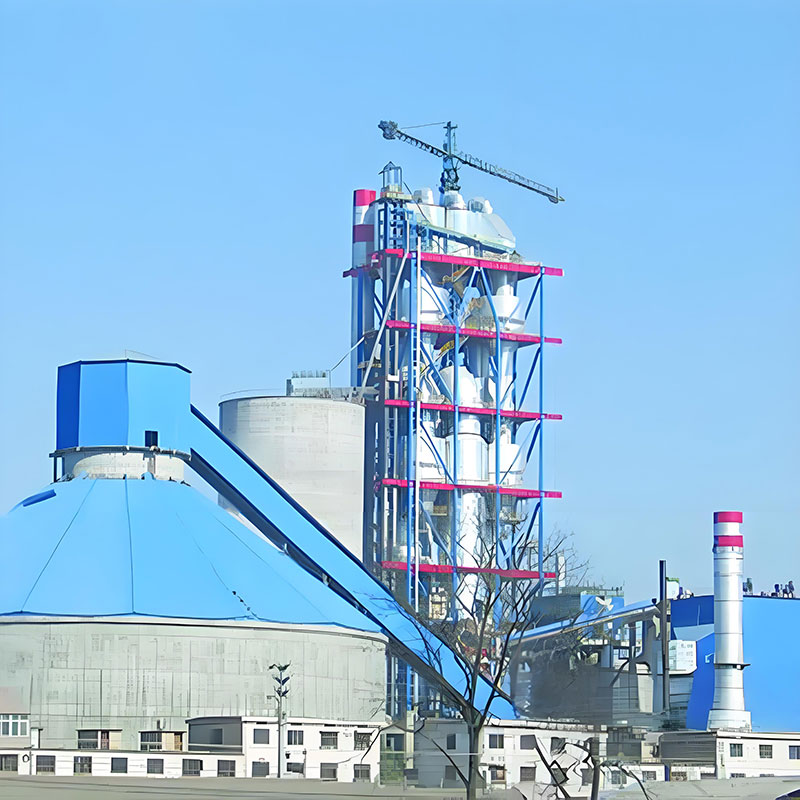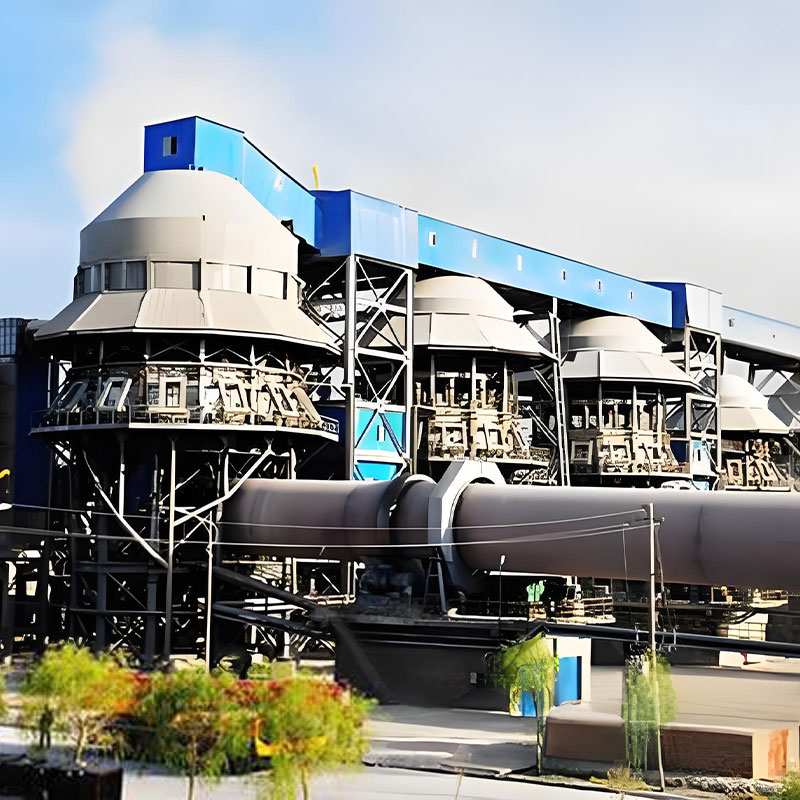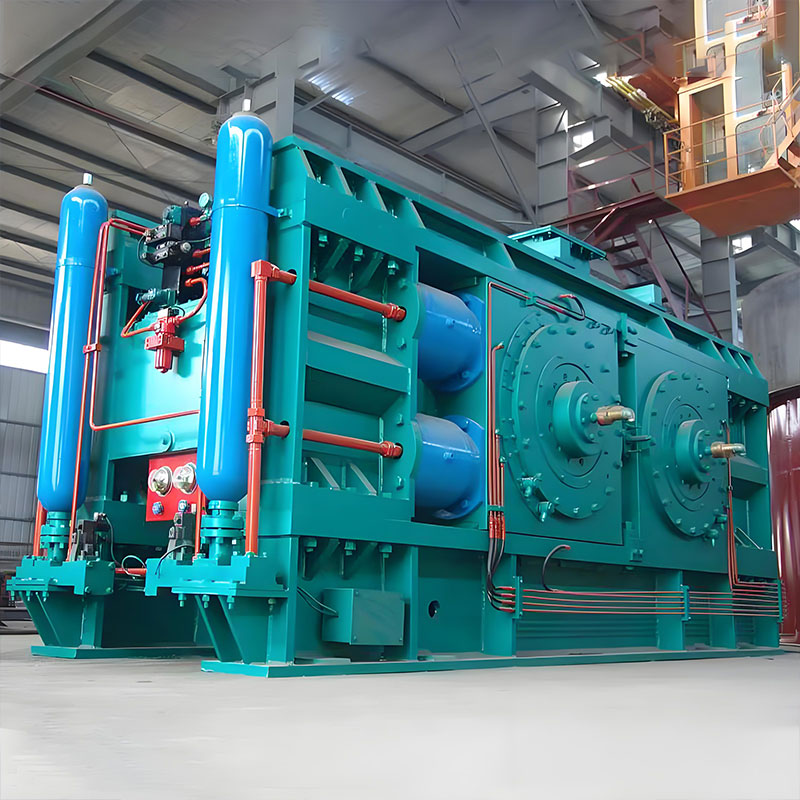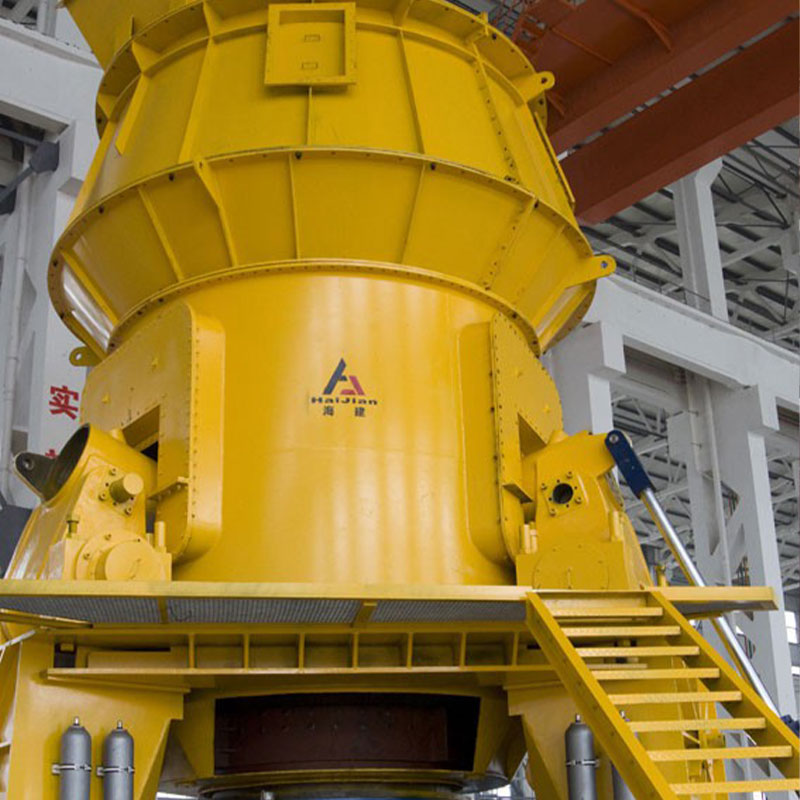
Modern cement production line equipment can improve plant efficiency by 35% or more compared to systems designed a decade ago — and in 2026, this gap is widening. The improvement comes from four converging factors: the replacement of wet-process kilns with dry-process precalciner technology, the adoption of high-efficiency vertical roller mills for raw material and finish grinding, the integration of waste heat recovery systems that capture up to 30% of thermal energy that previously escaped as flue gas, and the deployment of digital process control systems that eliminate manual adjustment delays and optimize equipment loading in real time.
This article breaks down each efficiency driver, explains the specific equipment involved, and provides practical guidance for plant operators and project engineers evaluating upgrades to cement plant process equipment for new or existing production lines.
Content
Understanding efficiency improvements requires a clear picture of the overall production sequence. Modern cement production line machinery operates as an integrated system — each piece of equipment affects the performance of the next, and optimizing one stage in isolation rarely delivers the full potential gain.
Each stage has specific equipment whose design, sizing, and operating parameters directly determine the overall line efficiency, energy consumption, and output capacity.
The transition from wet-process to dry-process precalciner technology is the most impactful upgrade available in process equipment of cement production line design. Wet-process kilns must evaporate enormous quantities of water — consuming 5,000–6,000 kJ per kilogram of clinker. Modern dry-process precalciner systems reduce this to 2,900–3,200 kJ/kg, a thermal energy saving of approximately 45%.
The precalciner accomplishes this by moving the energy-intensive calcination reaction out of the kiln and into a dedicated vessel where fuel combustion is more efficient and easier to control. By the time raw meal enters the rotary kiln, most of the chemical transformation is already complete — the kiln only needs to provide the high-temperature sintering environment rather than doing the full thermal work. This allows kiln dimensions to be reduced for equivalent output, or output to be increased for the same kiln size.
Specific Thermal Energy Consumption by Kiln Process Type (kJ/kg clinker)
Based on industry benchmark data for cement production process equipment. Actual values vary by plant configuration and raw material moisture.
Grinding — both raw material preparation and finish cement grinding — accounts for 60–70% of a cement plant's total electrical energy consumption. Choosing the right grinding equipment is therefore the single largest lever for reducing electrical energy use in cement plant process equipment configuration.
Vertical roller mills use grinding rollers pressed hydraulically onto a rotating grinding table to crush and grind material through compressive force. Compared to ball mills, VRMs consume 30–40% less electrical energy per ton of product for raw grinding and approximately 20–30% less for cement finish grinding. They also integrate drying, grinding, and classification in a single unit, reducing equipment footprint and installation complexity.
For raw material with moisture content up to 15–20%, VRMs can dry and grind simultaneously using kiln exhaust gases, eliminating the need for separate drying installations.
Ball mills remain in widespread use, particularly for finish grinding of specialty cements where specific particle size distributions are required. When equipped with modern third-generation dynamic separators, ball mill circuits can approach the energy efficiency of VRM systems for certain product specifications. Ball mill systems are also generally more tolerant of hard, abrasive materials with high silica content that can cause accelerated wear in VRM roller segments.
| Parameter | Ball Mill | Vertical Roller Mill | Roller Press (Combi) |
|---|---|---|---|
| Energy (kWh/t raw meal) | 14–20 | 8–12 | 9–13 |
| Energy (kWh/t cement) | 28–35 | 22–28 | 20–26 |
| Moisture tolerance | Low (<5%) | High (up to 20%) | Low (<3%) |
| Wear on abrasive material | Low–Medium | High | Medium |
| Footprint | Large | Compact | Medium |
One of the most impactful upgrades in modern energy efficient cement equipment design is the addition of a Waste Heat Recovery (WHR) system. Cement kilns and clinker coolers discharge large volumes of hot exhaust gas — typically at temperatures of 300–380°C at the preheater exit and 250–350°C at the cooler vent. These gas streams contain recoverable thermal energy that a WHR system converts into electricity through a steam cycle or organic Rankine cycle turbine.
A well-designed WHR installation on a 5,000 tonne/day clinker production line typically generates 8–12 MW of electrical power, covering 25–35% of the plant's total electrical demand without additional fuel consumption. At an average industrial electricity cost, this translates into substantial annual savings and a typical payback period of 3–5 years in most markets.
Typical WHR Power Output vs. Cement Line Capacity (tpd clinker)
Typical ranges for dry-process precalciner lines with WHR systems; actual output depends on kiln exhaust temperatures and cooler vent flow rates.
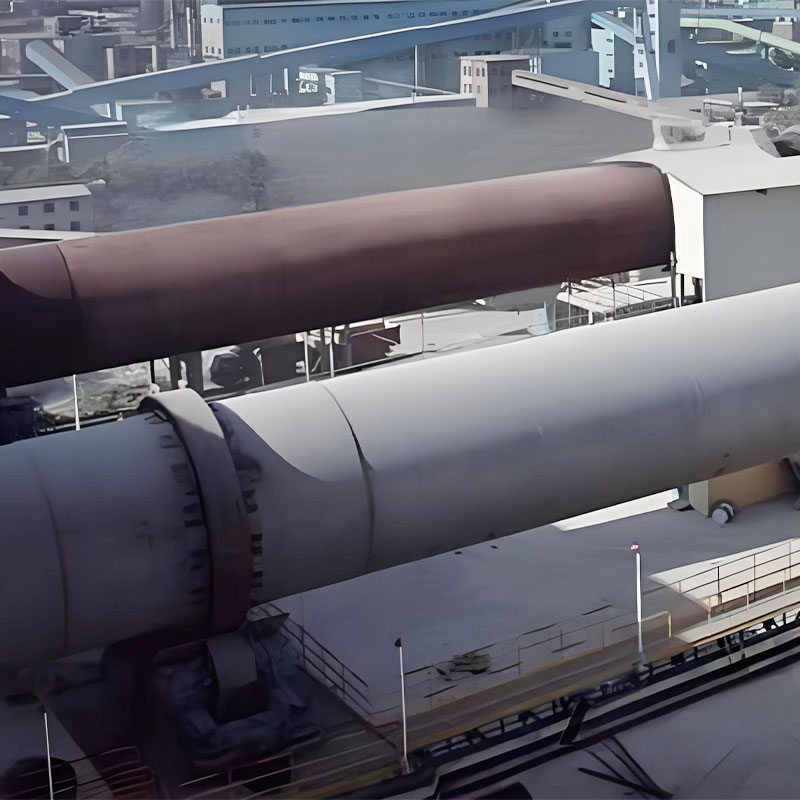
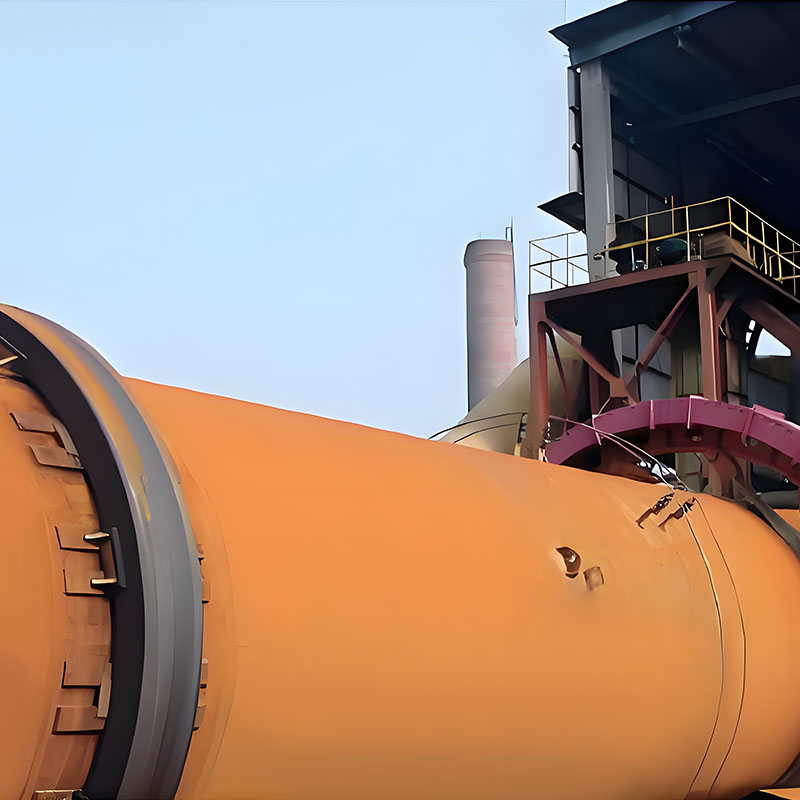
The rotary kiln remains the central piece of cement production line machinery, and its design directly determines clinker quality, fuel consumption, and production reliability. Modern kilns for precalciner lines are shorter and of larger diameter than earlier designs — a 5,000 tpd line typically uses a kiln of approximately Φ4.8 × 72m, compared to kilns of Φ4.0 × 60m used on older 3,000 tpd wet-process lines for the same output.
The grate cooler immediately downstream of the kiln is equally critical. Modern reciprocating or cross-bar grate coolers recover 70–75% of clinker heat as secondary and tertiary combustion air fed back into the kiln and precalciner — directly reducing fuel consumption. Older planetary coolers recovered only 55–60% of this heat. The temperature difference in the recovered air stream equates to a fuel saving of approximately 150–200 kJ/kg clinker in direct kiln operation.
The fourth major pillar of the 35% efficiency improvement is process automation. Even the most advanced energy efficient cement equipment operates below its potential when controlled manually — human operators cannot continuously optimize dozens of interdependent process variables simultaneously. Advanced process control (APC) systems do exactly this, adjusting feed rates, fan speeds, fuel flows, and separator speeds in real time based on a continuously updated process model.
Plants that have deployed APC on kiln and mill circuits typically report:
In 2026, leading plants are extending automation further with X-ray fluorescence (XRF) analyzers on raw material belts and cross-belt analyzers on raw meal that provide real-time chemistry feedback to the APC system — enabling proactive adjustment of raw mix proportions before variations reach the kiln.
When evaluating or specifying process equipment of cement production line for a new plant or major upgrade, engineering teams should work through a structured equipment selection framework that balances performance, reliability, and total cost of ownership.
| Equipment | Primary Selection Criterion | Key Performance Target | Maintenance Consideration |
|---|---|---|---|
| Primary Crusher | Feed size, hardness, throughput | Output <80 mm at rated tph | Liner wear rate, replacement access |
| Raw Mill (VRM) | Raw material moisture, grindability | ≤10 kWh/t, R90µm ≤12% | Roller segment hardfacing life |
| Preheater / Precalciner | Alkali bypass, raw meal chemistry | Calcination degree ≥93% | Cyclone coating buildup inspection |
| Rotary Kiln | Clinker capacity, fuel type flexibility | ≤3,200 kJ/kg, f-CaO ≤1.5% | Refractory lining life, shell scanning |
| Grate Cooler | Cooling efficiency, secondary air temp | Exit temp ≤65°C + ambient | Grate plate wear, air nozzle blockage |
| Cement Mill | Cement type range, output fineness | ≤28 kWh/t at target Blaine | Liner and grinding media replacement |
Jiangsu Haijian Co., Ltd. was established in 1970 and restructured into a provincial privately-owned joint-stock company in 2003. The company employs over 300 people, with engineering and technical personnel accounting for 25% of the total workforce. It covers an area of 100,000 m² with a building area of 55,000 m².
The company's manufacturing capabilities include vertical lathes ranging from Φ2.5–10m in diameter, gear hobbing machines with Φ2–8m capacity, floor-type lathes with Φ5×16m and Φ7×20m capacities, overhead cranes ranging from 10–150t, plate rolling machines from 30–120, gas annealing furnaces measuring 6.5×6.5×18m, and automatic drying and spraying booths — with a total of 500 units/sets of various equipment.
Jiangsu Haijian is a professional China process equipment of cement production line manufacturer and supplier. The company provides professional cement production equipment, industrial solid waste incineration equipment, and professional equipment for mining and metallurgical applications. It is a major manufacturing enterprise, a key backbone enterprise, and a primary export base for cement, power, environmental protection, and metallurgical and mining equipment in China.
The company holds the legal rights to independently manage the import and export of its products and is legally authorized to undertake general contracting for foreign projects, serving clients across Asia, Africa, the Middle East, and beyond.
Q1: What is the most energy-intensive piece of cement plant process equipment?
Grinding equipment collectively accounts for 60–70% of total electrical energy consumption in a cement plant. The rotary kiln dominates thermal energy use. For reducing electrical consumption, upgrading from ball mills to vertical roller mills or roller press circuits delivers the greatest single improvement. For thermal energy, transitioning to a dry-process precalciner with a high-efficiency grate cooler is the priority.
Q2: How long does it take to recover the investment in energy efficient cement equipment upgrades?
Payback periods vary by upgrade type. Waste heat recovery systems typically return investment within 3–5 years. Advanced process control systems on kilns and mills often achieve payback in 12–24 months due to low installation cost relative to fuel and electricity savings. VRM replacement of ball mill circuits typically has a payback of 4–7 years depending on electricity tariffs and production volume.
Q3: Can a vertical roller mill handle all cement types on a single production line?
Modern VRMs can produce a range of cement types including OPC (CEM I), blended cements (CEM II–V), and slag cements by adjusting grinding pressure, separator speed, and airflow parameters. However, certain specialty cements requiring very specific particle size distributions may still favor ball mill circuits for their greater flexibility in achieving particular Rosin-Rammler distribution parameters. A thorough product mix analysis should precede final grinding equipment selection.
Q4: What daily operating hours should be budgeted for cement production line machinery?
Modern cement production lines are designed for continuous operation targeting 7,800–8,000 operating hours per year, equivalent to approximately 325–333 days. The remaining time covers planned maintenance shutdowns (typically 20–30 days annually for refractory inspection and replacement), unplanned stoppages, and statutory inspection periods. Lines with well-implemented predictive maintenance programs consistently achieve the upper end of this operating hours range.
Q5: What fuels can modern cement kilns use beyond coal and natural gas?
Modern precalciner kilns are designed for high alternative fuel substitution rates, handling refuse-derived fuel (RDF), industrial waste solvents, agricultural biomass, tire-derived fuel, and sewage sludge. Thermal substitution rates of 40–80% are routinely achieved in European plants, and emerging market plants are increasingly targeting 30–50% substitution as alternative fuel supply chains develop. The precalciner is the optimal injection point for most alternative fuels due to its lower flame temperature requirements compared to the main kiln burner.
Q6: How does a waste heat recovery system integrate with existing cement plant process equipment?
A WHR system connects to the existing preheater exit gas duct and cooler vent gas stream through heat exchangers (boilers) that generate steam. The steam drives a turbine-generator set to produce electricity fed directly into the plant's internal distribution system. Integration requires careful attention to maintaining adequate gas flow through the raw mill circuit — most WHR installations include a bypass damper system that diverts gas around the boiler when the raw mill requires the full thermal input for drying.
It is focused on the overall solution of dry bulk material port transfer system,
research and development, manufacturing, and service