A cement ball mill improves grinding efficiency primarily through optimized media loading, precise control of rotation speed, advanced liner design, and closed-circuit classification systems. When properly configured, a modern Industrial Cement Ball Mill can reduce specific energy consumption by 20–35% compared to outdated open-circuit designs, while increasing throughput by 15–30%.
This article breaks down the core mechanisms, technical parameters, and best practices that drive efficiency in cement grinding operations.
Content
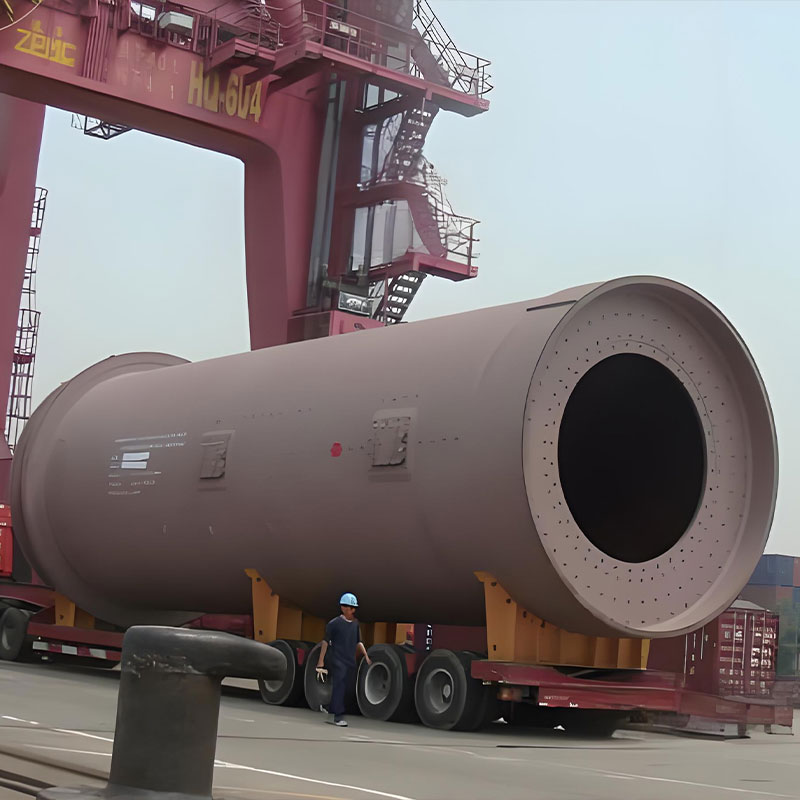
A Cement Grinding Ball Mill is a horizontal rotating cylinder filled with steel balls or other grinding media. Raw materials — clinker, gypsum, and additives — are fed into the drum, where the tumbling media crushes and grinds the material into fine powder through impact and attrition.
Key operational components include:
Most modern plants use two-compartment mills: the first compartment performs coarse grinding (balls 60–100 mm), while the second achieves fine grinding (balls 20–40 mm), improving overall size reduction efficiency.
The size distribution of grinding media directly affects energy transfer. A well-graded ball charge ensures that impact energy is matched to particle size at every stage. For example:
| Compartment | Ball Size (mm) | Filling Ratio (%) | Function |
|---|---|---|---|
| First | 60–100 | 28–32 | Coarse impact grinding |
| Second | 20–40 | 30–35 | Fine attrition grinding |
Operating at 70–75% of critical speed is widely regarded as optimal for most cement mills. Running too fast causes media to centrifuge against the wall, eliminating impact. Running too slow results in sliding rather than cascading, reducing attrition. Variable frequency drives (VFDs) now allow real-time speed adjustment, improving adaptability to feed variations.
Modern high-chrome or rubber composite liners extend service life by 30–50% and reduce energy loss from ball slippage. Classifying liners in the second compartment automatically sort balls by size, keeping finer media at the discharge end for more precise fine grinding.
Closed-circuit systems equipped with high-efficiency separators can increase mill output by up to 40% without additional energy input. Separated coarse particles are returned to the mill inlet, preventing over-grinding of fine particles and reducing energy waste.
Grinding accounts for 40–60% of total energy consumption in cement production. An Energy Saving Cement Ball Mill addresses this through several engineering advances:
Figure 1: Specific Energy Consumption Comparison Across Grinding Configurations (kWh/t)
Consistent monitoring of operational parameters allows plant operators to maintain maximum grinding efficiency. The following parameters are critical for an Industrial Cement Ball Mill:
| Parameter | Target Range | Impact on Efficiency |
|---|---|---|
| Mill filling ratio | 28–35% | High — affects power draw and throughput |
| Operating speed | 70–75% of critical | High — determines media trajectory |
| Feed moisture content | < 1.5% | Medium — excess moisture causes coating |
| Separator efficiency | > 75% | High — reduces over-grinding |
| Product fineness (Blaine) | 3000–4500 cm²/g | Direct — defines product quality |
| Mill inlet/outlet temperature | < 120°C | Medium — prevents gypsum dehydration |
The cement industry has seen steady improvement in grinding efficiency over the past three decades, driven by advances in separator technology, media engineering, and process automation. The chart below illustrates the trend in average specific energy consumption for cement grinding globally:
Figure 2: Industry Trend — Average Specific Energy Consumption for Cement Grinding (kWh/t), 1990–2024
From 52 kWh/t in 1990 to approximately 25 kWh/t in 2024, the cement industry has achieved a ~52% reduction in grinding energy intensity, largely attributed to widespread adoption of high-efficiency separators, pre-grinding equipment, and optimized Energy Saving Cement Ball Mill designs.
Temperatures above 120°C cause gypsum dehydration (converting to hemihydrate), leading to false setting in the finished cement. Solutions include water injection into the mill, ventilation optimization, and reducing feed rate during peak temperature periods.
When feed moisture exceeds 1.5%, fine particles adhere to grinding balls, reducing contact efficiency. Using chemical grinding aids or reducing feed moisture content to below 1% resolves this issue in most cases.
Inconsistent fineness often results from worn diaphragm grates or separator malfunction. Routine inspection of grates (every 3–6 months) and calibration of separator rotor speed prevents this problem.
Incorrect ball-to-material ratio or overly abrasive feed accelerates liner wear. Upgrading to high-manganese steel or composite rubber liners extends replacement intervals by 40–60%.
Jiangsu Haijian Co., Ltd was established in 1970 and was restructured into a provincial privately-owned joint-stock company in 2003. The company currently employs over 300 people, with engineering and technical personnel accounting for 25% of the total workforce. It covers an area of 100,000 m² and has a building area of 55,000 m².
The company possesses advanced manufacturing equipment, including vertical lathes ranging from Φ2.5–10 m in diameter, gear hobbing machines with Φ2–8 m capacity, floor-type lathes with Φ5×16 m and Φ7×20 m capacities, overhead cranes ranging from 10–150 t, plate rolling machines, gas annealing furnaces, and automatic drying and spraying booths — with a total of 500 units/sets of various equipment.
Jiangsu Haijian Co., Ltd is a professional China Cement Ball Mill Manufacturer and Cement Vertical Mill Company. We provide professional cement production equipment, industrial solid waste incineration equipment, and professional equipment for mining and metallurgical applications. We are a major manufacturing enterprise, a key backbone enterprise, and a primary export base for cement, power, environmental protection, and metallurgical and mining equipment in China. The company holds independent import and export rights and is authorized to undertake general contracting for foreign projects.
Q1: What is the difference between an open-circuit and closed-circuit cement ball mill?
In an open-circuit system, material passes through the mill only once. In a closed-circuit system, a separator returns oversized particles for re-grinding. Closed-circuit mills typically achieve 30–40% higher output and produce more consistent fineness with lower specific energy consumption.
Q2: How often should grinding media be replenished?
Ball wear depends on feed hardness and grinding intensity. Typically, 20–50 grams of ball per ton of cement ground is the average wear rate. Plants usually conduct bi-weekly or monthly top-up schedules and perform a full ball charge audit every 6–12 months.
Q3: Can a cement ball mill process materials other than clinker?
Yes. A Cement Grinding Ball Mill is versatile and can process slag, fly ash, limestone, gypsum, and various industrial minerals. Feed parameters (hardness, moisture, particle size) may require adjustments to ball size, speed, and liner configuration.
Q4: What does "energy saving" mean for an Energy Saving Cement Ball Mill?
Energy saving designs typically incorporate rolling element main bearings (reducing start-up load by 60%), optimized liner geometry, higher-efficiency motor drives, and better-sealed structures. Combined, these features reduce power consumption by 15–30% compared to conventional designs.
Q5: How do I choose the right capacity Industrial Cement Ball Mill for my plant?
Selection depends on required output (t/h), target Blaine fineness, feed material grindability (Bond Work Index), and available power supply. It is recommended to conduct a grindability test on your clinker and work with a qualified equipment manufacturer to size the mill correctly for your specific conditions.
It is focused on the overall solution of dry bulk material port transfer system,
research and development, manufacturing, and service