
 English
  русский
  Español
 Industry News
Home / News / Industry News / Air Entrainment of Concrete: How It Works and Why Durability Depends on It
A bridge deck in a northern city carries traffic through its twentieth winter with its surface still sound, while a similar deck three kilometers away spalls and potholes by its fifth. The decisive difference is usually invisible: about 5 percent of the hardened concrete's volume is air, placed there on purpose. Air entrainment of concrete is the deliberate creation of billions of microscopic, stable air bubbles in a mix through a surfactant-based admixture, and it remains the most reliable defense against freeze-thaw deterioration and de-icing salt scaling. What follows explains what entrained air actually is, why those bubbles work, what they cost in strength, and how batching practice, supplementary materials, and cement quality decide whether the specified air content survives from the mixer to the finished structure.
Content
Entrained air is not the same as the holes you see in a poorly compacted wall. Entrapped air is accidental: larger, irregular voids, typically 1 to 2 percent of volume, left behind by insufficient vibration or rough handling. Entrained air is engineered: spherical bubbles, mostly between about 10 and 100 micrometers across, finer than a human hair, distributed through the cement paste at close and even spacing. A mix designed for freezing exposure carries a total air content of roughly 4 to 7 percent by volume, which works out to billions of individual bubbles in every cubic meter.
The bubbles are stabilized by air-entraining admixtures, traditionally derived from wood resins and natural soaps, today often synthetic surfactants. Their molecules gather at the water-air interface, lower the surface tension, and give each bubble wall enough elasticity to survive mixing, transport, placing, and vibration without collapsing or coarsening.
Water inside saturated cement paste expands about 9 percent in volume as it freezes. In concrete without protective voids, that expansion generates hydraulic pressure inside the capillary pores, and the paste cracks the first time a wet element freezes solid. Repeated cycles then propagate the damage into delamination and spalling, and de-icing salts make things worse by keeping the surface saturated and adding osmotic stress.
Air voids change the physics. Every bubble within a short distance of freezing paste acts as an expansion chamber: as ice grows, water is pushed out of the capillary system into the nearest void, where pressure dissipates harmlessly. Protection therefore depends on how far water has to travel, a property expressed as the void spacing factor. Durable performance generally calls for a spacing factor of about 0.20 mm or less, which is why even distribution of fine bubbles matters more than the total air percentage alone.
Freeze-thaw resistance is the headline benefit, but it is not the only reason producers entrain air. In the plastic state, entrained air:
After hardening, that same void system carries the durability load: resistance to freezing and thawing, to de-icing salt scaling, and to the internal stress cycles that destroy exposed pavements and decks.
The durability gain has a measurable price. As a working rule, each additional 1 percent of air lowers compressive strength by roughly 4 to 5 percent. A mix that gains 5 percentage points of air for severe exposure therefore starts out about 20 percent below the strength of the same mix without it.
Designers recover part of that loss because entrained air improves workability: at the same slump, water content can be trimmed, and a lower water-cement ratio pushes strength back up. On well-proportioned structural mixes, the net penalty is smaller than the raw rule suggests. In elements exposed to wet freezing the argument is moot anyway, because non-air-entrained concrete there does not fail by insufficient strength; it fails by disintegration. The objection that matters is different: high-strength, low water-cement ratio mixes and hard steel-troweled interior floors, where entrained air genuinely reduces the properties the element needs. That is where specifications correctly skip it.
Seen side by side, the trade-offs are easy to read:
| Property | Air-Entrained Concrete | Non-Air-Entrained Concrete |
|---|---|---|
| Freeze-thaw durability | High; voids relieve ice pressure | Poor in wet freezing; paste cracks |
| De-icing salt scaling | Strongly resistant | Prone to surface scaling |
| Workability at equal water | Higher; water can be trimmed slightly | Lower for the same slump |
| Bleeding and segregation | Reduced; better cohesion | More bleed water and weak pockets |
| Compressive strength | About 4-5% lower per 1% air | Baseline |
| Typical total air content | 4-7% by volume | 1-2% entrapped only |
| Best suited to | Pavements, bridge decks, exposed work in freezing climates | Interior slabs, mild climates, high-strength elements |
Air entrainment is a dynamic process. Mixing shear creates bubbles and destroys bubbles at the same time, and the air content measured in the drum is the balance point between the two. That is why the same admixture at the same dosage can deliver 6 percent air on one load and 3.5 percent on the next. The variables with the strongest influence:
Good batching practice treats air like any other measured property: test it on every load where exposure is severe, adjust dosage to hold the specified range, and never rely on the batch ticket average.
For concrete producers, the cement itself is another variable that moves admixture demand. Cement chemistry and fineness both change how much air-entraining agent a paste needs and how stable the resulting bubbles stay. Alkali and sulfate levels fixed in the burning process, clinker mineralogy shaped by the kiln temperature profile, and fineness produced by the grinding circuit all act on the surface chemistry of cement particles. A cement plant that holds those parameters steady delivers a product whose admixture demand is predictable, which is exactly what a ready-mix operation needs to keep air inside specification across seasons.
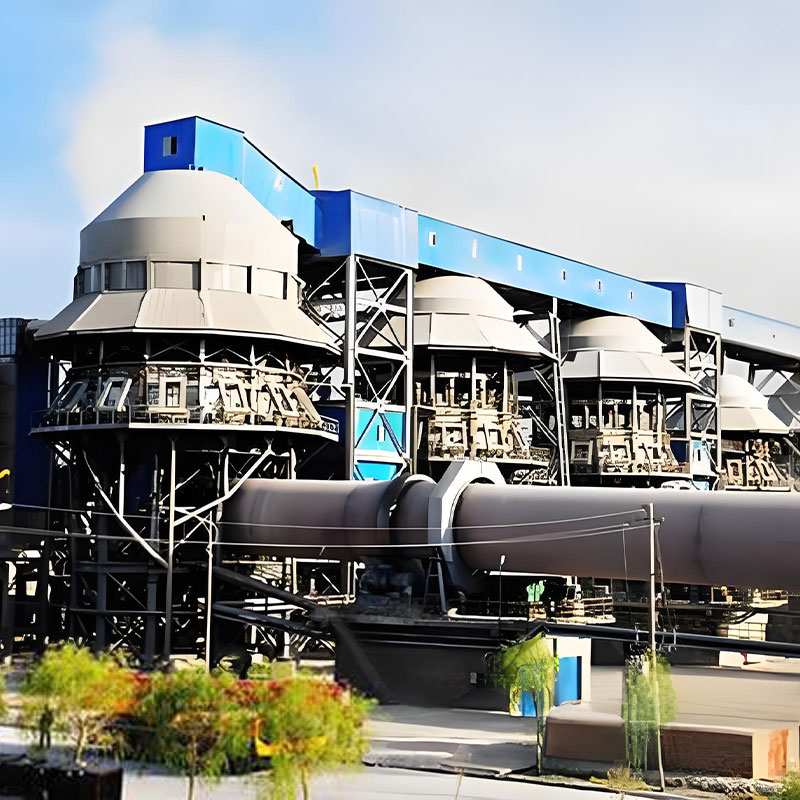
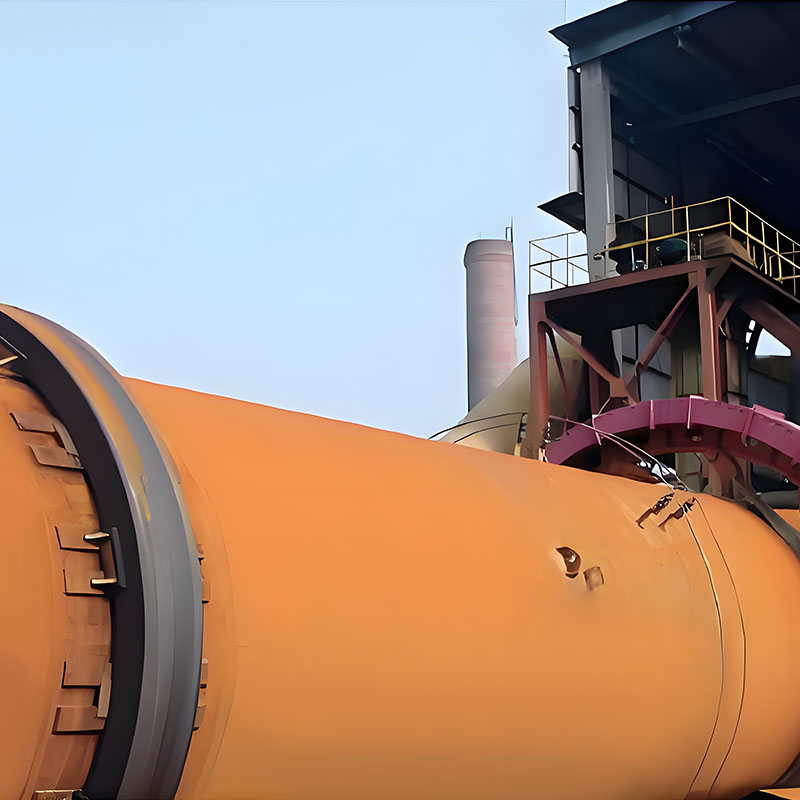
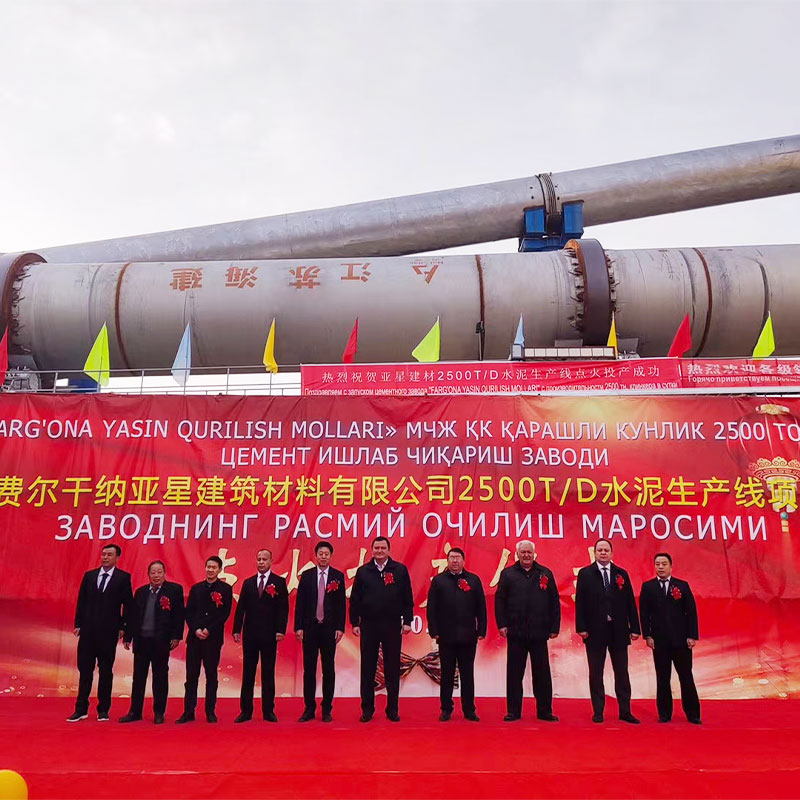 Rotary Kiln for Stable Cement Clinker CalcinationThe rotary kiln is the core equipment for calcining cement clinker, with monitoring systems that stabilize burning conditions and clinker chemistry. Steady kiln operation keeps alkali and sulfate levels consistent, making admixture demand predictable for concrete producers.View Product →
That consistency is engineered rather than lucky. It comes from stable kiln operation and controlled clinker chemistry on one side, and from a grinding circuit that holds fineness within a narrow band load after load on the other. Buyers comparing cement production equipment should look closely at both stages, because they quietly determine downstream concrete quality. For the grinding side in particular, our article on what a cement mill actually controls goes into more detail.
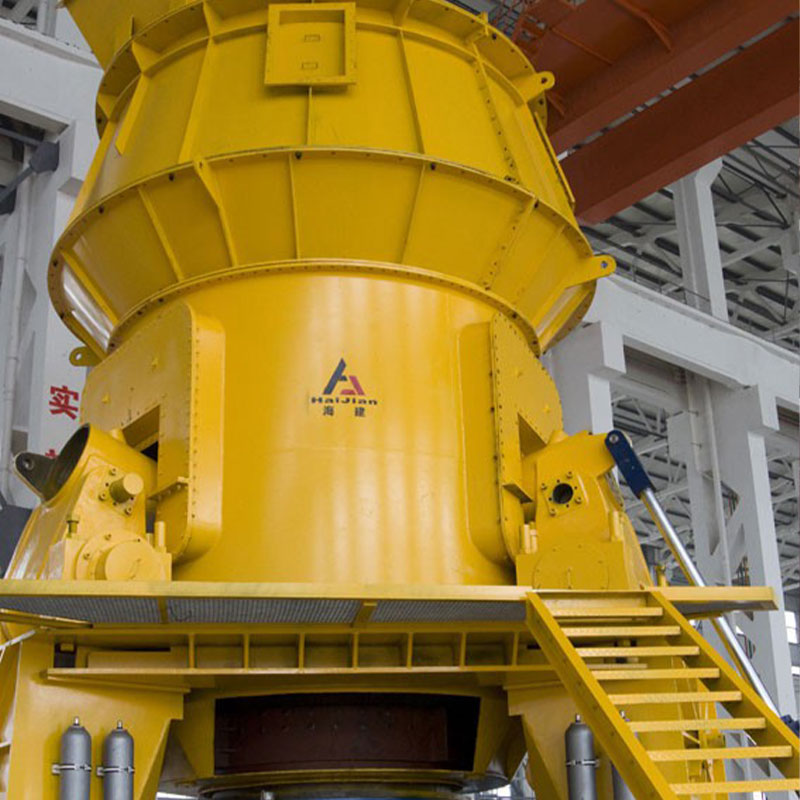
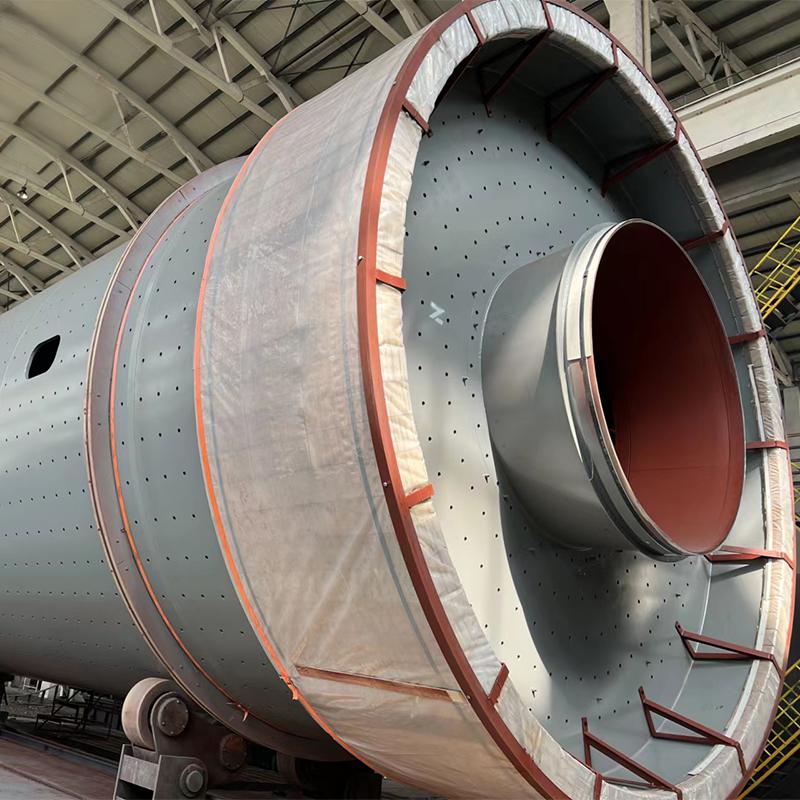 Cement Mill for Consistent Product FinenessThe cement mill grinds clinker, gypsum and additives to target fineness, which directly governs particle distribution and strength. A grinding circuit that holds fineness within a narrow band load after load helps downstream users keep air content in specification.View Product →
Because air content cannot be judged by eye, acceptance testing is standard on exposed work. Three methods dominate:
Specifications for freezing exposure usually set a range, for example 4.5 to 7.5 percent total air, rather than a single value, acknowledging normal load-to-load variability. Sampling at the point of placement, not only at the truck, catches losses caused by long hauls, pumping, and rough handling.
Specification practice follows exposure, and the logic is easy to apply. Air entrainment earns its cost in concrete that will be saturated and frozen:
The deciding question is short: will the hardened concrete be wet when it freezes? If yes, entrain air. If no, weigh the workability benefit against the strength loss and decide on numbers, not habit.
For cement producers and grinding plant operators, air entrainment is a reminder that quality problems surface far from their origin. Unstable clinker chemistry or drifting fineness never shows up at the plant gate; it appears months later as a ready-mix customer struggling to hold air within range, or as a spalling pavement on a highway project. Consistency at the source, stable burning, controlled clinker chemistry, and a grinding circuit that repeats its fineness target load after load, is what lets downstream users hit tight air targets with confidence.
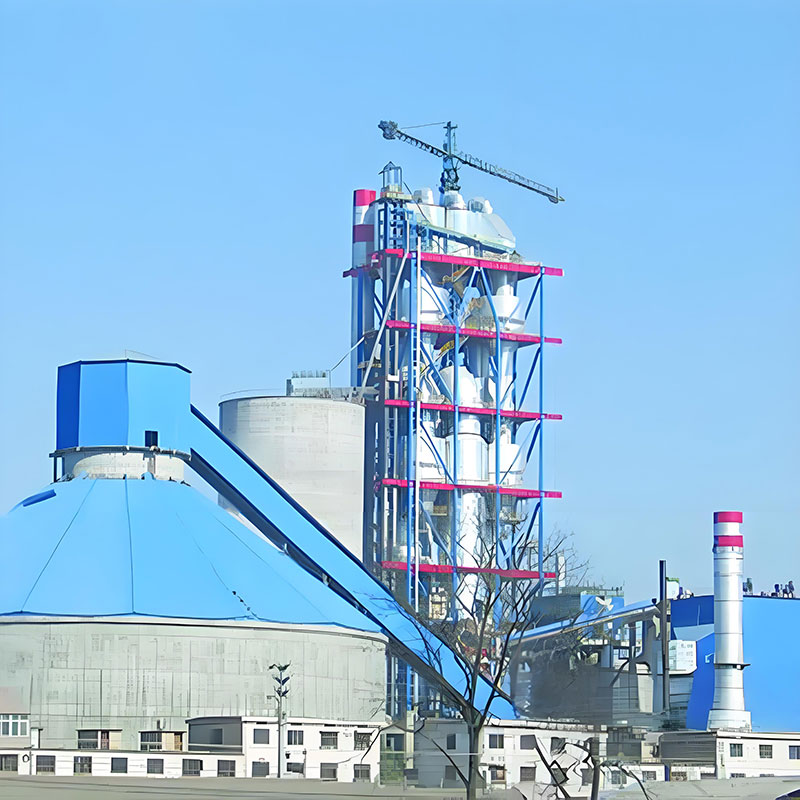
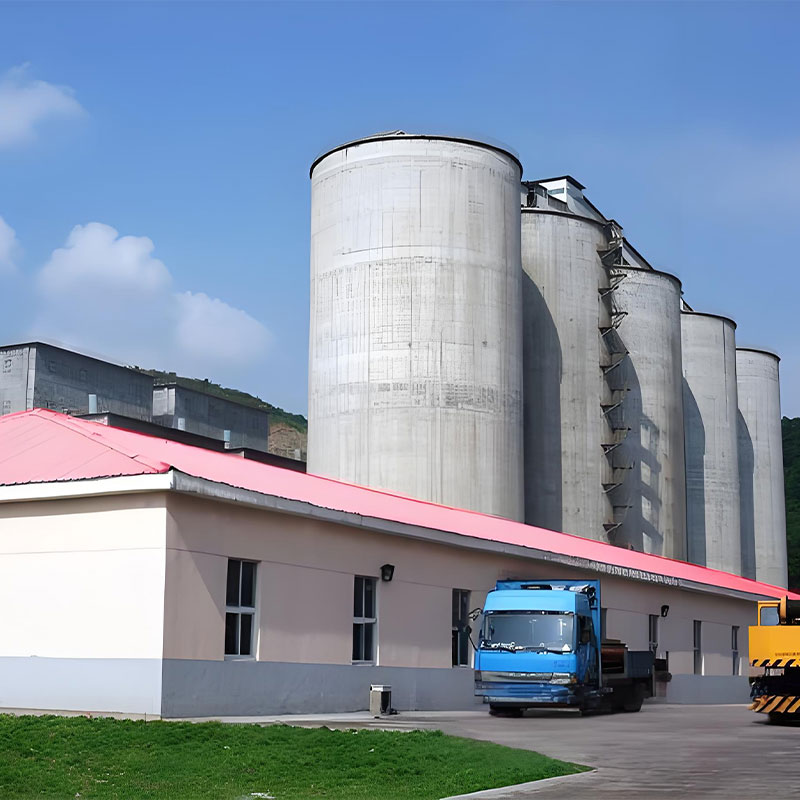 Cement Grinding Station for Finished Cement ProductionA cement grinding station processes clinker, gypsum, slag and fly ash into finished cement through crushing, grinding and classification. Quality controlled at this terminal stage prevents air entrainment and durability problems from surfacing far downstream.View Product →
Haijian builds complete cement production lines and standalone grinding stations engineered around exactly that consistency, from raw material preparation through finished cement. If you are evaluating equipment for a new line or an upgrade, contact our engineers to discuss the parameters your customers depend on.
It is focused on the overall solution of dry bulk material port transfer system,
research and development, manufacturing, and service